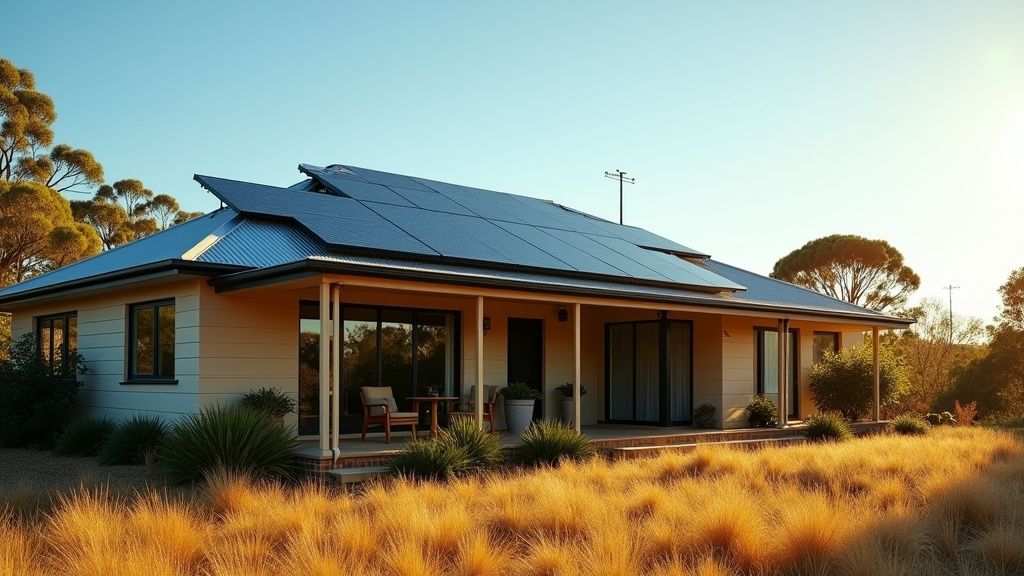
Solar Panel Efficiency Under Real-World Conditions in Australia
Thinking about going solar? Understanding solar panel efficiency is crucial for Aussie homeowners looking to maximise their investment. It's not just about the numbers on a spec sheet; it's about how well those panels perform on your roof, under the scorching Australian sun and occasionally, under a cloudy sky. Before you dive in, check out our Complete Guide for an in-depth look.
What is Solar Panel Efficiency?
Simply put, solar panel efficiency is the percentage of sunlight that a solar panel can convert into usable electricity. A higher efficiency rating means the panel is better at capturing the sun's energy and turning it into power to run your appliances, heat your water, or even charge your EV. While all panels will produce power, a more efficient panel will generate more electricity from the same amount of space.
The Efficiency Range: What to Expect
Commercially available solar panels in Australia generally range in efficiency from around 15% to 23%. This figure is determined under controlled laboratory conditions, which aim to provide a standardized measure for comparison. However, these ideal conditions rarely reflect the reality of your roof.
Types of Solar Panels and Efficiency:
Different types of solar panel technologies offer varying levels of efficiency:
- Monocrystalline Panels: These are the champions of efficiency, often boasting ratings between 19% and 23%. They are made from a single, pure silicon crystal, giving them a highly uniform structure for optimal energy conversion. The trade-off? They tend to be the most expensive option.
- Polycrystalline Panels: A more budget-friendly choice, polycrystalline panels typically range from 15% to 18% efficiency. They are made from multiple silicon crystals, making them less efficient than their monocrystalline counterparts but more accessible in price.
- N-type Panels: An emerging technology, N-type panels use silicon wafers doped with phosphorus, which offers advantages like improved efficiency and less degradation over time compared to traditional P-type panels.
- HPBC (Hybrid Passivated Back Contact) Panels: This cutting-edge tech removes metal grids from the front of the panel, allowing for more sunlight absorption and higher efficiency.
- HJT (Heterojunction Technology) Panels: By combining crystalline silicon with thin-film silicon layers, HJT panels boost efficiency and perform well in hot climates.
- TOPCon (Tunnel Oxide Passivated Contact) Panels: Building on PERC cell technology, TOPCon panels add a thin tunnel oxide layer to reduce electrical losses and increase overall efficiency.
Real-World Factors Affecting Efficiency in Australia:
The efficiency rating you see on the spec sheet is a good starting point, but it's crucial to understand how real-world conditions affect performance:
- Temperature: Solar panels perform best at around 25°C. In the heat of an Australian summer, panel temperatures can soar, leading to a drop in efficiency. This is known as the temperature coefficient. Look for panels with a low (more negative) temperature coefficient.
- Shading: Even partial shading can significantly reduce a panel's output. Trees, buildings, or even accumulated dust can cast shadows and impact performance.
- Panel Angle and Orientation: The angle and orientation of your panels relative to the sun's path greatly impact energy production. A professional installer will optimise this for your location.
- Dust and Dirt: Over time, dust, dirt, and bird droppings can accumulate on your panels, reducing the amount of sunlight they absorb. Regular cleaning can help maintain efficiency.
- Age: Like all technology, solar panels degrade slightly over time. A typical panel might degrade by 0.5% per year, meaning that after 25 years, it might be producing around 80% of its original output.
Why Efficiency Matters for Australian Consumers:
- Maximising Power Output: More efficient panels generate more electricity from the same roof space, which is particularly important if you have limited space.
- Cost Savings: By generating more power, you can reduce your reliance on the grid and lower your electricity bills.
- Environmental Impact: Efficient panels translate to a smaller carbon footprint per unit of electricity generated.
- Future-Proofing: High-efficiency panels can help you meet your future energy needs, especially if you plan to add electric vehicles or other high-power appliances.
Beyond Efficiency: Other Factors to Consider:
While efficiency is important, don't overlook these other crucial factors:
- Cost: Balance efficiency with your budget. A slightly less efficient panel might be more cost-effective in the long run, depending on your energy needs.
- Warranty: Look for panels with a long performance warranty, guaranteeing a certain level of output over time.
- Durability: Choose panels that are built to withstand the harsh Australian climate, including strong winds, hail, and UV exposure.
- Installer Reputation: A reputable installer will properly assess your roof, recommend the right panels, and ensure a professional installation.
Making the Right Choice:
Choosing the right solar panels for your Australian home is a balancing act. Consider your budget, energy needs, roof space, and local climate conditions. Consulting with a qualified solar installer is highly recommended. They can assess your specific needs and recommend the best panels for your situation. By understanding solar panel efficiency and the factors that affect it, you can make an informed decision and enjoy the benefits of clean, reliable solar power for years to come.
