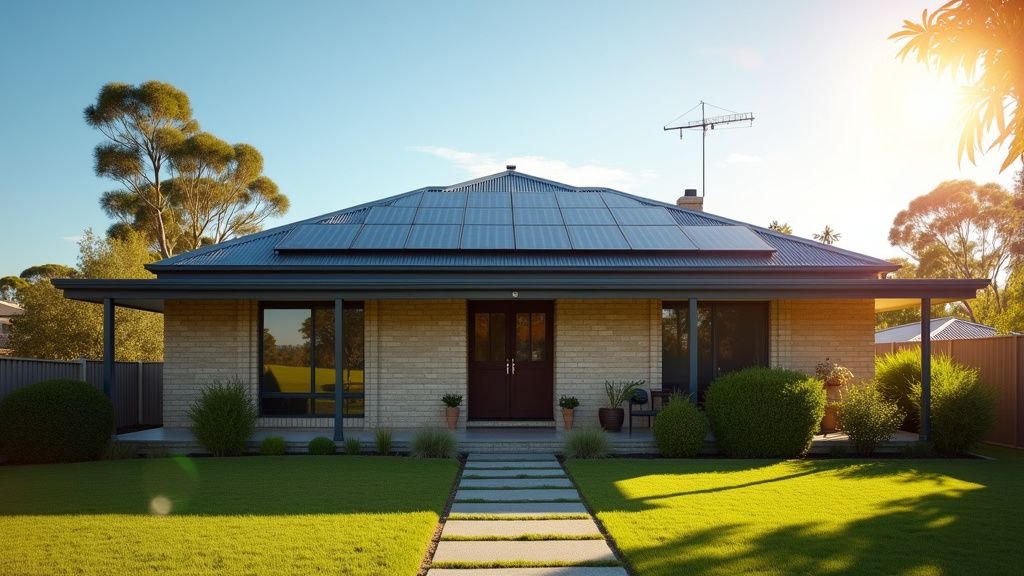
Solar Panel Efficiency and Roof Size: Maximizing Your Solar Potential in Australia
Thinking about going solar? Smart move! Solar power is a fantastic way to reduce your electricity bills, shrink your carbon footprint, and increase your home's value. But before you jump in, it’s crucial to understand how solar panel efficiency and your roof size work together to determine how much electricity you can generate. This blog post will break down these factors, helping you make informed decisions and get the most bang for your buck from your solar investment.
Want a deeper dive? Check out our Complete Guide for a more comprehensive understanding of solar panel technology in Australia.
Understanding Solar Panel Efficiency
When sunlight hits a solar panel, it's converted into electricity. This process is known as the photovoltaic (PV) effect. The efficiency of a solar panel refers to the percentage of sunlight it can successfully convert into usable electricity. The higher the efficiency, the more electricity you get from the same amount of sunlight.
Think of it this way: imagine two identical buckets sitting out in the rain. One bucket has a wider opening, catching more rainwater. That’s analogous to a more efficient solar panel; it captures more of the available sunlight and turns it into power.
Panel efficiency is a crucial factor to consider, especially if you have a limited roof space. A more efficient panel allows you to generate more power within a smaller area. Typically, solar panels for residential use in Australia come in sizes of around 1 meter wide and 1.7 meters long. Larger panels are available, but efficiency is still key.
Solar panel efficiency is gradually improving as the technology advances. So, what does that mean for you?
Roof Size Matters
Obviously, the amount of available roof space directly impacts the size of the solar system you can install. A larger roof provides more room for panels, leading to potentially greater electricity generation.
However, simply cramming as many panels as possible onto your roof isn't always the best strategy. Factors like roof orientation (facing north is ideal in Australia), shading from trees or other buildings, and the panel's efficiency all play a role.
The Interplay: Efficiency and Roof Size
The relationship between solar panel efficiency and roof size is critical. Let's illustrate with an example:
Imagine you have a relatively small roof.
- Option 1: Standard Efficiency Panels: Using panels with a lower efficiency might require you to cover most of your roof to achieve your desired energy output, potentially limiting your ability to expand your system later.
- Option 2: High-Efficiency Panels: With higher-efficiency panels, you could generate the same amount of electricity with fewer panels, leaving some roof space available for future expansion or other uses.
The rated capacity of a solar panel is the amount of power it generates under 'standard test conditions', an industry benchmark. It is measured in watts (W). A typical home solar system may consist of multiple panels.
The overall generating capacity of a solar system is measured in kilowatts (kW). For example, a system comprised of 19 x 350W panels would have a capacity of 6.65kW.
Keep in mind that the actual power generated by your solar panels will vary depending on weather conditions and your location. The generating capability of solar panels decreases slightly over time. This is referred to as degradation.
On average, in Australia, 1kW of solar panels can generate between 3.5 kWh and 5 kWh of electricity per day, averaged over a year. This will vary depending on the location, the angle of the panels, and the direction they face.
Maximizing Your Solar Potential: Practical Tips
Here are some practical tips to help you maximize your solar potential in Australia:
- Assess Your Energy Needs: Before anything else, understand your current electricity consumption. Review your past energy bills to determine your average usage. This will help you estimate the size of the solar system you need.
- Evaluate Your Roof: Consider the size, orientation, and shading of your roof. North-facing roofs are ideal, but east- or west-facing roofs can also work. Address any shading issues by trimming trees or relocating obstructions.
- Consult with a Qualified Installer: A reputable solar installer can assess your specific situation and recommend the best solar panel options for your needs and budget. They will consider factors like your roof size, energy consumption, and local climate.
- Compare Panel Options: Don't just focus on the price per panel. Compare the efficiency ratings, warranty information, and overall performance of different brands and models.
- Consider Future Needs: Think about your future energy needs. Are you planning to purchase an electric vehicle or add more appliances? It might be wise to install a slightly larger system than you currently need to accommodate future growth.
- Explore Government Incentives: Take advantage of available government rebates and incentives to reduce the upfront cost of your solar system.
- Factor in System Degradation: All solar panels degrade slightly over time. Consider that when calculating your long-term energy production.
Conclusion
Choosing the right solar panels and system size is a crucial decision that requires careful consideration. By understanding the interplay between solar panel efficiency and roof size, you can make informed choices and maximize your solar potential. Remember to consult with a qualified installer to get personalized advice and ensure your system is properly installed and optimized for your specific needs. With the right approach, you can enjoy the benefits of clean, affordable solar energy for years to come.
