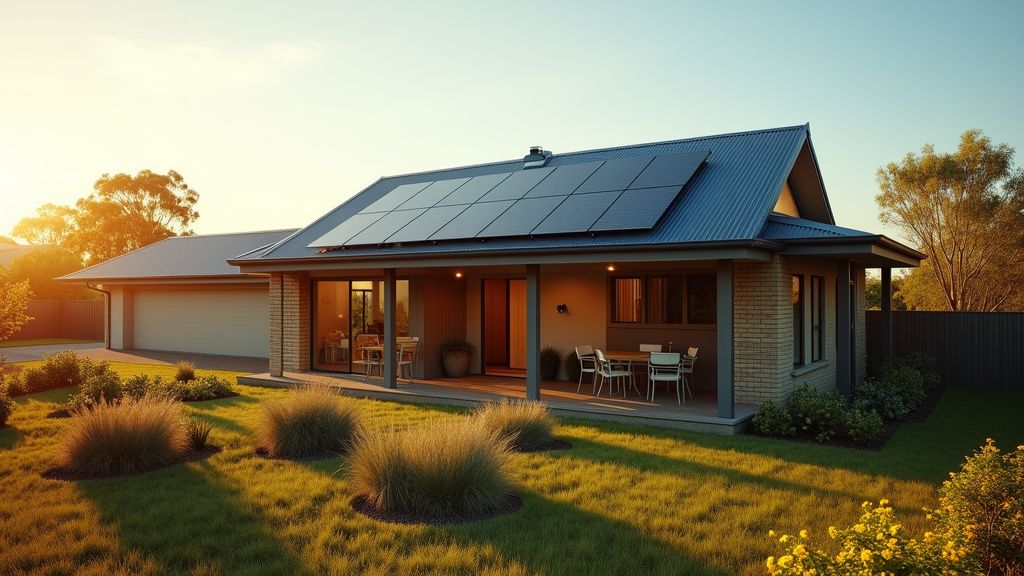
Solar's Smart Shift: What to Expect from Your Rooftop by 2026
The Australian solar landscape is undergoing a significant transformation. We're moving beyond simply generating clean energy to a more sophisticated era of grid integration and intelligent energy management. The conversation is shifting from kilowatt production to how well your solar system plays with the broader energy network. With networks grappling with record solar generation, particularly during midday, and increasing demand in the evenings, a new wave of solar innovation is upon us. This change focuses on control, coordination, and flexibility.
Are you thinking about investing in solar, upgrading your existing system, or adding battery storage? Understanding these changes now will help you make informed decisions. If you are unsure whether it's a worthwhile investment, read our Complete Guide.
The Brains of the Operation: The Evolving Inverter
By 2026, expect your inverter to be much more than just a DC-to-AC converter. It's becoming the central control hub of your home energy system, intelligently managing how your solar panels respond to real-time grid conditions. As export limits become tighter and networks prioritize stability, inverters will be expected to actively adjust their output, support voltage levels, and communicate seamlessly with the grid.
Think of it this way: instead of operating on fixed rules, your inverter will dynamically decide when to store excess energy, when to export it to the grid, and when to prioritize self-consumption based on factors like your household's energy demand, electricity tariffs, and any limitations imposed by the grid.
Regulatory changes are reinforcing this trend. In Western Australia, for instance, new frameworks are expected to require inverters to be inherently "grid-interactive." This means built-in support for dynamic export limits, remote updates, and active grid response will become standard, not optional extras. Inverter intelligence is quickly becoming a fundamental requirement for future-proof solar systems across Australia.
Dynamic Export Limits: A Flexible Approach
Say goodbye to static export limits. By 2026, many Australian solar households will experience dynamic export limits, meaning the amount of energy you can export to the grid will fluctuate based on real-time conditions, time of day, and network demand.
The reasoning is clear. During sunny midday periods, some areas generate more rooftop solar power than the local network can handle. However, at other times, particularly in the late afternoon or early evening, that export capacity becomes valuable. Dynamic export limits respond to these changing conditions, either relaxing or tightening export permissions, replacing the blunt instrument of fixed restrictions.
This shift requires a change in mindset. Maximum exports may not always be available, but smart solar systems will adapt by diverting excess energy to batteries, EV chargers, or powering household appliances. This approach minimizes wasted energy and rewards households that can adjust their energy usage patterns.
Batteries: More Than Just Backup
Home batteries are evolving beyond mere backup power or energy independence. While those remain benefits, the next wave of battery adoption is driven by economics and optimized system performance. As export limits get tighter and feed-in tariffs (FiTs) remain modest, storing solar energy for later use becomes the most reliable way to maximize the value of your investment.
Expect to see more households strategically matching battery capacity to their evening energy demand, taking advantage of higher grid prices when solar generation is low. Batteries will become essential tools for shifting energy usage patterns, especially in homes with electric vehicles or high evening consumption, working alongside smart chargers to smooth demand throughout the day.
Government policies are also supporting the mainstream adoption of batteries, with more structured incentives and consistent installation standards simplifying the process for homeowners. Importantly, batteries are being designed to integrate more seamlessly with inverters, tariffs, and network signals, moving away from the standalone "add-on" model.
In 2026, a key question for many households will be whether their solar system is properly configured to effectively utilize a battery when the time is right, capturing the full potential of stored solar energy.
The Road Ahead: Smart, Integrated, and Flexible
The future of solar in Australia is smart, integrated, and flexible. To get the most value from your solar system by 2026, focusing on intelligent inverters, understanding dynamic export limits, and considering battery storage tailored to your needs is paramount. These advancements not only benefit individual households but also contribute to a more stable and resilient energy grid for all Australians.
