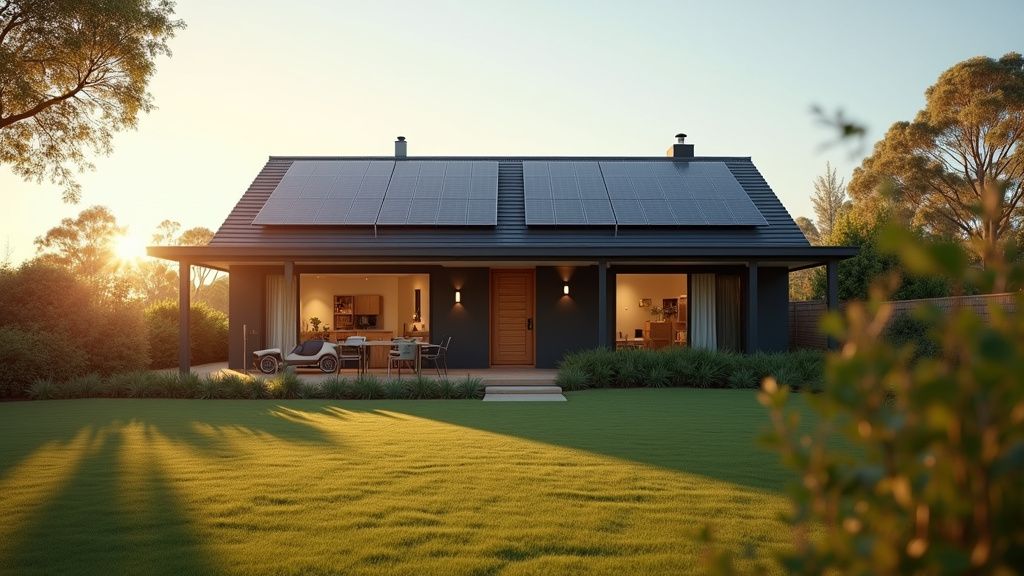
Powering the Future: How EVs, Solar and Batteries are Revolutionising Australian Homes
The convergence of electric vehicles (EVs) and home energy systems is creating a wave of opportunity for Australian homeowners. We're talking cleaner, cheaper, and more efficient ways to power both your home and your transport. Think smarter energy management, and the potential to earn revenue from your car. To understand the best way to size your system, read our Complete Guide.
As EV adoption accelerates across the nation, Australian households are perfectly positioned to benefit from this increasingly interconnected energy ecosystem. If you're considering making the switch to an EV, integrating an EV charger with your existing (or new) solar system is a seriously clever way to essentially "fuel" your car with sunshine.
The Rise of the Smart Home Energy System
EV ownership is on the rise, driven by falling prices, a growing charging infrastructure, and attractive government incentives. More and more drivers are realising the long-term cost savings and significant environmental advantages of going electric.
Simultaneously, our homes are becoming smarter and far more energy-conscious. Solar panels, home batteries, and smart inverters are working together, blurring the lines between how we move and how we power our lives. This transformation is fundamentally changing the way energy is generated, stored, and used.
Smart Charging: The Key to Efficiency
EV charging has evolved far beyond the days of slow, overnight trickle charging. Today, homeowners have access to rapid, efficient, and intelligent charging systems designed to minimise costs and maximise energy independence.
Smart charging is becoming increasingly vital as more and more households integrate solar power, energy storage, and EV charging into a single, unified system. Imagine being able to optimise your charging schedule based on solar production, grid prices, and your driving needs.
Solar and Batteries: The Perfect Pairing for EV Owners
One of the most significant advantages of owning an EV in Australia is the ability to charge it using your own rooftop solar. This dramatically reduces running costs and minimises your carbon footprint.
Pairing solar power with a home battery amplifies these benefits even further. It allows you to store excess solar energy generated during the day and use it to charge your EV at night. This maximises the value of your solar investment and gives you greater flexibility in how and when you charge your car. A well-sized home battery can ensure your EV gets charged even on those less sunny days or during periods of peak electricity tariffs.
Turning Your Car into a Power Source: The Future of V2G
EVs are more than just vehicles; they are essentially large energy storage systems on wheels. Emerging Vehicle-to-Home (V2H) and Vehicle-to-Grid (V2G) technologies will soon allow Australians to use their car batteries to power their homes and even support the wider electricity grid. Imagine using your car battery to keep the lights on during a blackout or selling excess energy back to the grid during peak demand periods.
A Smarter Grid for a Smarter Future
As more Australians adopt EVs and smart energy systems, the electricity grid itself is also evolving. Smart meters, AI-powered energy management systems, and dynamic electricity tariffs are empowering households to optimise their energy consumption like never before.
The combination of EVs, solar panels, batteries, and smart grids is paving the way for a cleaner, more efficient, and more resilient energy future for all Australians.
The Role of Virtual Power Plants
Virtual Power Plants (VPPs) are cloud-based systems that connect and manage thousands of distributed energy resources, including solar installations, home batteries, and V2G-enabled EVs. These VPPs coordinate these assets to provide services to the grid operator, such as reducing demand or injecting power when needed, ensuring grid stability and reliability.
Challenges and Opportunities
The transition to an EV-centric energy model isn't without its challenges. These include the need for more affordable EVs equipped with V2G technology and the standardisation of national regulations for charger installation. However, the potential for Australians to achieve genuine energy independence and contribute to a stronger, cleaner grid is enormous. The substantial capacity of an EV battery, often dwarfing that of most home batteries, presents homeowners with a unique opportunity to actively participate in the energy market.
Looking Ahead
The future of home energy in Australia is undeniably intertwined with the rise of EVs, solar power, and battery storage. By embracing these technologies and participating in emerging energy programs, Australians can take control of their energy future, reduce their carbon footprint, and save money in the process. The power is quite literally in your hands (or, perhaps, parked in your driveway).
