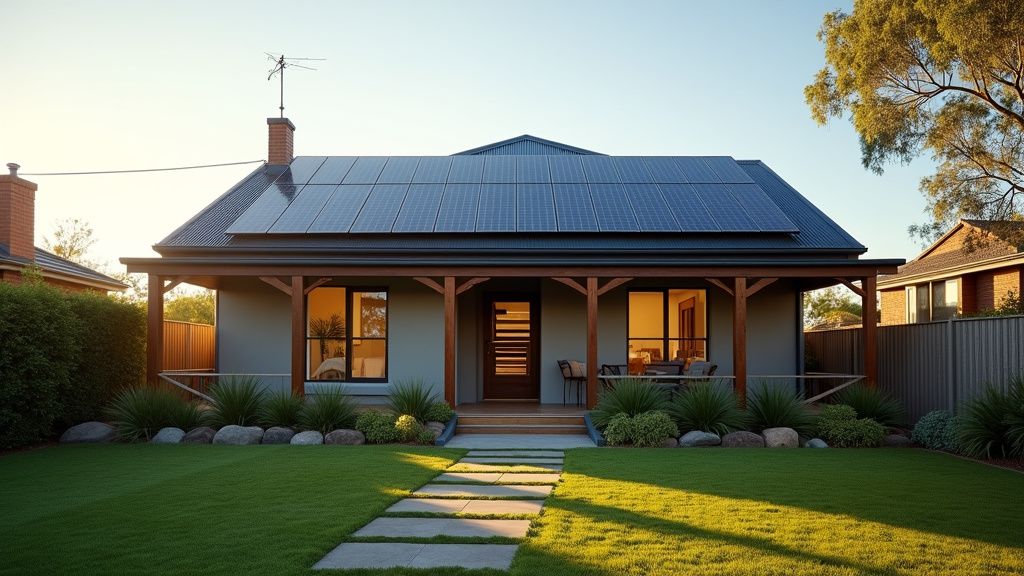
Power Up Your Aussie Home: Sizing Solar, Batteries, and EV Chargers
G'day solar enthusiasts! As an independent journalist for SolarInsights, I'm here to guide you through the exciting world of home energy independence. Many Aussies are now looking beyond just solar panels and considering battery storage and EV chargers to truly maximise their energy savings and reduce their reliance on the grid. But where do you start when it comes to sizing these systems for your home? Let's break it down.
Solar PV System Sizing: Capturing the Sun's Rays
The first step is determining the right size solar panel system for your energy needs. This hinges on your daily electricity consumption, which you can find on your electricity bills. Look for the average daily kilowatt-hour (kWh) usage.
Factors influencing solar system size:
- Your energy consumption: A larger household with higher energy demands (think air conditioning, swimming pools, and multiple occupants) will need a larger system.
- Roof space and orientation: The amount of usable roof space and its direction (north-facing is ideal in Australia) will impact the number of panels you can install.
- Budget: Solar panel systems vary in price, so setting a budget beforehand helps narrow down your options.
- Future needs: Are you planning on getting an EV or adding more appliances in the future? Factor in potential increased energy consumption.
A good starting point is to aim for a system size that roughly matches your daily energy usage. For example, if you use 15 kWh per day, a 5-6kW solar system may be a suitable starting point, but ensure you discuss this in detail with a qualified installer. They can assess your property and provide a tailored recommendation.
Battery Storage: Storing Sunshine for Later
Battery storage allows you to store excess solar energy generated during the day and use it later, typically in the evening or during periods of low solar production. This is where things can get a bit more nuanced.
A common mistake is to assume you need a battery big enough to cover 100% of your nighttime energy use. While tempting, this can be an expensive approach. Instead, consider these points:
- Nighttime energy usage: Determine how much energy you typically use at night. This will give you a baseline for your battery storage needs.
- Self-consumption vs. grid independence: Are you primarily focused on maximising self-consumption (using as much of your solar energy as possible) or achieving complete grid independence? The former is generally more cost-effective.
- Backup power: Do you want your battery to provide backup power in case of a blackout? If so, you'll need to factor in additional capacity.
A good rule of thumb is to aim for battery storage equal to at least 25% of your daily usage, plus a small buffer for backup. So, if you use 20 kWh a day, a 7 kWh battery could be a suitable starting point. It may not cover your entire night-time usage, but it should cover the peak evening hours when electricity prices are typically highest.
Currently, battery storage costs around $800 to $1000 per kWh installed (before any government rebates), so it's essential to carefully consider your needs and budget. The initial kilowatt-hours of storage provide the quickest return on investment, as they are used every night.
EV Charging: Powering Your Ride
If you own or plan to own an electric vehicle, integrating an EV charger with your solar and battery system is a smart move.
Consider these factors when sizing your EV charging system:
- EV battery capacity: The larger the EV battery, the longer it will take to charge.
- Charging speed: EV chargers come in different power levels, ranging from slow (Level 1) to fast (Level 2 or DC fast charging). Level 2 chargers are typically used for home charging and can add around 40-50 kilometres of range per hour of charging.
- Charging habits: How often and how much do you drive? This will determine how often you need to charge your EV.
- Solar energy availability: Charging your EV during the day when your solar panels are generating electricity is the most cost-effective option.
A typical home EV charger is rated at 7kW. Depending on the size of your solar system, you may be able to charge your EV entirely with solar energy. If you have a battery, you can also charge your EV using stored solar energy at night.
Getting Professional Advice
Sizing solar PV, battery storage, and EV charging systems can be complex. It's always best to consult with a reputable and experienced solar installer. They can assess your specific needs, provide tailored recommendations, and ensure your system is installed safely and efficiently. They can analyse your energy usage data, assess your roof, and discuss your budget and goals to design a system that's right for you.
By carefully considering your energy needs and working with a professional installer, you can create a home energy system that saves you money, reduces your carbon footprint, and provides greater energy independence. Happy solar powering, Australia!
