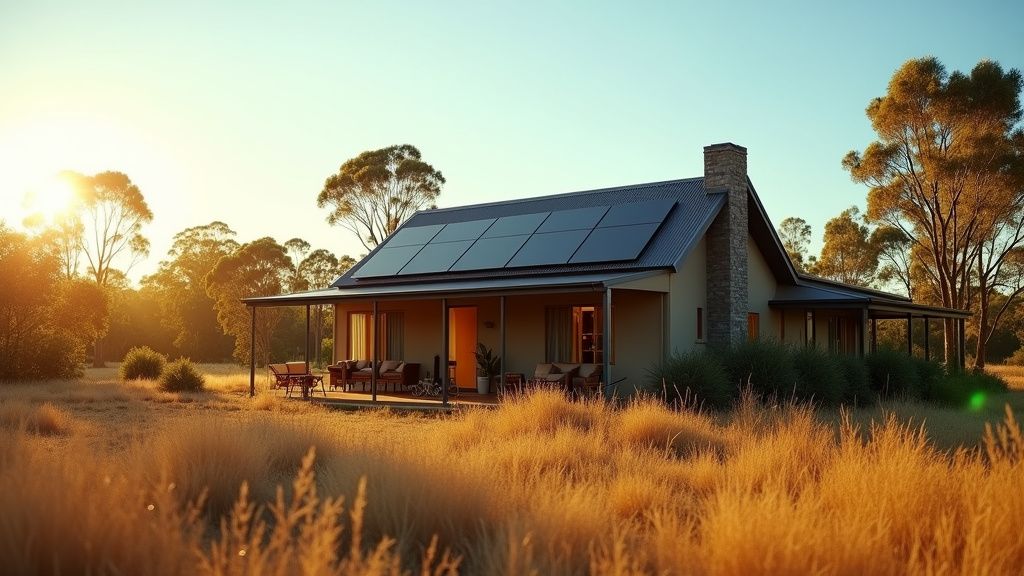
Cutting the Cord: Is Off-Grid Living with Solar Battery Storage a Realistic Choice for Aussies?
With rising electricity prices and increasing concerns about grid reliability, the idea of energy independence is becoming increasingly appealing to many Australians. But is cutting the cord and going off-grid a viable option, and how does solar battery storage factor into the equation?
More Australians are considering disconnecting from the main electricity grid, and while some are motivated by cost savings, most are driven by necessity. This is often because their property is in a remote location, the cost of connecting to the grid is prohibitively expensive, or they experience frequent power outages. In these situations, going off-grid can be the most practical and financially sound solution.
Before diving in, for a more in-depth look, be sure to check out our Complete Guide for everything you need to know.
What Does "Off-Grid" Actually Mean?
Going completely off-grid signifies achieving total energy independence. This means your property isn't connected to the main electricity grid. Instead, you generate and store all your own power on-site using a combination of technologies.
The Core Components of an Off-Grid System
A reliable off-grid power system relies on three key components:
- Solar Panels: These generate electricity from sunlight, powering your home during the day and charging your batteries.
- Battery Storage: Batteries store excess solar energy, providing power when the sun isn't shining, such as at night or on cloudy days.
- Backup Generator: While ideally used sparingly, a generator provides a crucial backup power source during extended periods of low solar production. It's far more cost-effective to use a generator sparingly than to invest in significantly more battery capacity to cover rare events.
The Cost Factor: Upfront Investment vs. Long-Term Savings
The cost of establishing an off-grid system in Australia varies considerably based on factors like your location, energy consumption, available roof space, site conditions, and the level of backup power required. It's important to acknowledge the significant upfront investment, but also to consider the long-term value.
Since off-grid systems are designed for self-sufficiency and high dependability, their components tend to be more robust (and therefore more expensive) compared to those used in grid-connected or hybrid systems. This higher initial investment ensures greater reliability and performance around the clock.
Scenarios Where Off-Grid Living Makes Sense
While not suitable for everyone, going off-grid makes the most sense in the following scenarios:
- Remote Properties: If you live in a remote or regional area where grid access is unavailable. A significant proportion of the Australian population resides in areas where relying on solutions like solar power and microgrids is essential.
- Prohibitively Expensive Grid Connection: If the cost of connecting to the grid is excessively high. Sometimes, extending power lines can cost as much or more than setting up a complete off-grid system.
- New Builds in Remote Areas: For new construction projects far from existing infrastructure. In these cases, it's often more cost-effective to invest in an off-grid system from the outset.
In these situations, off-grid living offers not only independence but also greater financial and energy security.
Payback Period and Maintenance
Although off-grid systems require a substantial initial investment, they typically pay for themselves within approximately 15 years. This timeframe often aligns with the point at which major components may need replacing. For properties where grid connection would cost tens of thousands of dollars, going off-grid is often the more economical choice from the beginning.
Maintenance requirements are generally low. Apart from occasional generator servicing, most systems operate autonomously. Inverters and batteries might need replacement after 15 years or more, but advancements in technology continue to improve their performance and extend their lifespan.
Solar Battery Rebates in 2025
The introduction of solar battery rebates makes investing in a self-sufficient power system more affordable than ever. These incentives can significantly reduce the initial cost, making it easier to take control of your energy future.
Is Off-Grid Living Right for You?
Deciding whether to go off-grid requires careful consideration of your individual circumstances, energy needs, and financial situation. While it offers numerous benefits, including energy independence and long-term cost savings in certain situations, it also demands a significant upfront investment. Carefully assessing your options and understanding the costs and benefits is essential before making a decision. By doing your research, you can determine if cutting the cord is the right move for your lifestyle and financial goals.
