Solar Battery Storage and Off-Grid Living: Is it Right for You, Mate?
G'day solar enthusiasts! Here at SolarInsights, we're always looking at ways Australians can harness the power of the sun, not just for a greener future, but also a lighter wallet. One question we hear a lot is: "Can I ditch the grid altogether and live completely off solar power?"
The short answer is yes, it's absolutely possible. But like a good snag on the barbie, there's more to it than meets the eye. Let's dive into the world of solar battery storage and off-grid living in Australia.
What Does "Off-Grid" Actually Mean?
Going off-grid means your home generates enough renewable energy, and stores enough of it, to meet all your electricity needs without relying on the main electricity grid. Solar battery storage is the key ingredient to achieving this independence. Instead of sending excess energy back to the grid (and often getting a less-than-ideal return), you store it in a battery for use when the sun isn't shining, like at night or on cloudy days.
The Allure of Off-Grid Living:
The appeal is obvious: energy independence, freedom from rising electricity prices, and a smaller environmental footprint. It sounds like the Aussie dream, right? Well, let’s look at the practicalities.
The Solar Battery Storage Factor:
Solar battery technology has come a long way, making off-grid living more achievable than ever before. Batteries store the surplus power your solar panels generate during the day, allowing you to use it whenever you need it. This means you're consuming your own clean energy, reducing your reliance on fossil fuel-powered grids.
The Reality Check: Is it Feasible?
While the idea is attractive, several factors influence the feasibility of going completely off-grid:
- System Size: You'll need a substantial solar panel array and a large battery storage system. Think significant roof space, potentially 60-70 square metres for an average home trying to achieve high reliability. A recent study suggests that achieving 95% solar power reliability might require a 7kW solar system and a 35kWh battery storage pack. This is a considerable investment.
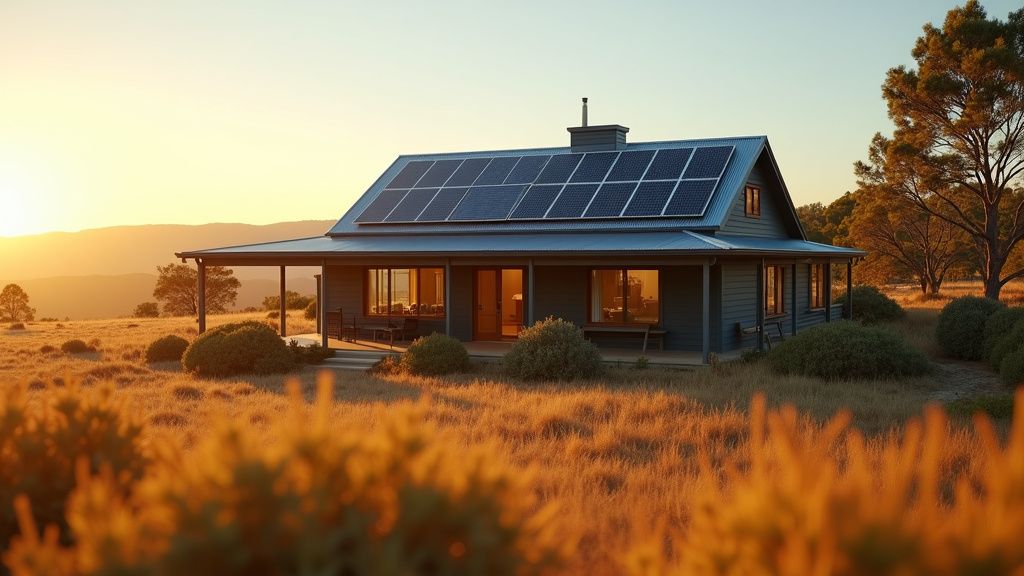
- Location, Location, Location: If you're in a rural area with plenty of space, you're already a step ahead. City dwellers might find it more challenging due to limited roof space.
- Climate Considerations: Australia's climate varies wildly. Solar systems don't always reliably meet a household's energy demands, especially during those short, cloudy winter days. You need sufficient battery storage to cover these periods.
- Upfront Costs: Setting up an off-grid system is a significant upfront investment. While the cost of solar panels and batteries is decreasing, it’s still a substantial expense.
- Energy Efficiency: The less energy you consume, the smaller your solar and battery system needs to be. Improving your home's energy efficiency is crucial for making off-grid living viable. Think LED lighting, energy-efficient appliances, and good insulation.
The Hybrid Approach: Best of Both Worlds?
For many Australians, a "hybrid" system might be the sweet spot. This involves having solar panels and battery storage, but remaining connected to the grid as a backup. This approach offers several benefits:
- Reduced Energy Bills: Solar battery storage increases the amount of self-generated electricity you use, potentially from 30% to 60%. This translates to significant savings on your electricity bills.
- Reliability: You have the security of grid power when your solar system isn't producing enough energy.
- Lower Upfront Costs: A hybrid system might require a smaller battery and solar array than a completely off-grid system, lowering the initial investment.
Off-Grid Communities: A Glimpse into the Future?
Interestingly, there are innovative residential developments popping up across Australia that are designed from the ground up to be more sustainable. One example is a housing estate in Western Australia which combines over 100 solar systems with a large centralised battery storage system. These types of projects could be an indication of future trends, where solar battery storage is integrated into the design of new communities.
The Verdict: Is Off-Grid Living Right for You?
Going off-grid in Australia is achievable, but it requires careful planning, a significant investment, and a realistic assessment of your energy needs and consumption habits. For some, especially those in rural areas with abundant space, it can be a financially viable and empowering choice. However, for many Australians, a hybrid system offers a more practical and cost-effective way to harness the power of the sun, reduce energy bills, and contribute to a cleaner environment.
Before making any decisions, it's crucial to get professional advice from qualified solar installers. They can assess your specific needs, provide accurate cost estimates, and help you determine the best solution for your situation.
So, whether you dream of complete energy independence or simply want to lower your electricity bills, solar battery storage has a role to play in Australia's energy future. Keep an eye on SolarInsights for more insights and updates!
