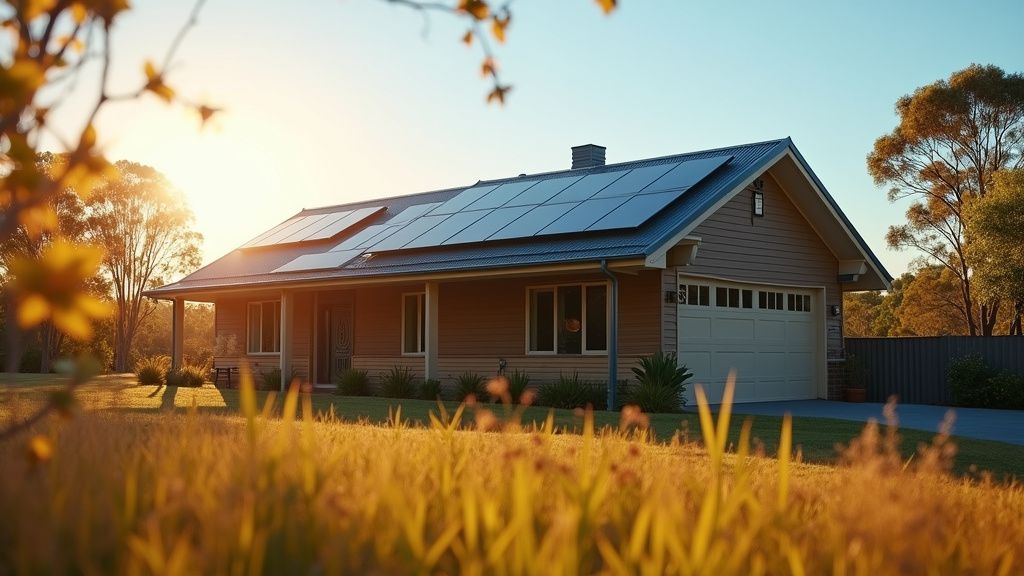
Solar Power in Australia 2026: A Financial Analysis
Is solar power still a bright investment for Australian households and businesses as we head towards 2026? The answer, as always, is nuanced, depending on factors ranging from government incentives to technology advancements, and even the weather. Let's delve into a financial analysis of the current state of solar in Australia and what we can expect in the coming year.
Before we get started, if you're wondering whether investing in solar is right for you in 2026, check out our Complete Guide for a detailed breakdown.
The Current Landscape: Late 2025 Snapshot
The Australian renewable energy sector continues to grow strongly, exceeding previous expectations and milestones. Data from the latter half of 2025 paints a picture of increasing renewable energy penetration into the National Electricity Market (NEM) and Western Australia’s Wholesale Electricity Market (WEM). Recent figures show that renewables accounted for an impressive average of 42.7% of generation in the NEM and 36.4% in the WEM during the third quarter of 2025. This signifies a solid increase compared to the same period in 2024.
Wind generation played a major role, reaching a record quarterly average, bolstered by recovery from a "wind drought" experienced the previous year. Grid-scale solar also saw substantial growth, marking new highs for electricity production. In Western Australia, renewables reached a new peak for a 5-minute interval, demonstrating the potential for even higher penetration in the future.
LGCs: What's Happening with Renewable Energy Certificates?
The Large-scale Generation Certificate (LGC) market, a key mechanism supporting renewable energy projects, has experienced some shifts. A very high number of LGCs were created in the last quarter, largely driven by wind generation. This strong supply has caused LGC spot prices to decrease from approximately $16.50 to $10.80, and forward prices have followed a similar trend.
Importantly, the Clean Energy Regulator (CER) is expected to approve close to 7 GW of new renewable capacity in 2025, including both Large-scale Renewable Energy Target (LRET) and Small-scale Renewable Energy Scheme (SRES) capacity. These developments are a positive sign for future growth and affordability within the solar sector.
Investment Trends and Future Projections
Final Investment Decisions (FIDs) – the green light for new renewable energy projects – experienced a dip in 2023. While capacity reaching FID has been down, the CER is still tracking a substantial amount of capacity in projects categorized as likely to proceed. Based on auction results, experts anticipate a stronger FID performance throughout 2026, especially in the second half of the year. This means that new solar farms and wind farms are likely to be commissioned and connected to the grid, adding to the overall renewable energy supply.
Financial Implications for Households and Businesses
So, how does all of this translate into the financial implications for everyday Australians considering solar power?
- Lower Electricity Prices (Potentially): Increased renewable energy generation could put downward pressure on wholesale electricity prices, potentially leading to lower bills for consumers. However, other factors like network costs and retail margins also play a significant role.
- Feed-in Tariffs: Fluctuations in LGC prices may affect the feed-in tariffs offered by electricity retailers for excess solar energy exported back to the grid. It's essential to shop around and compare tariffs from different providers.
- Government Incentives: The SRES continues to provide upfront discounts on the purchase and installation of solar panel systems for eligible households and businesses. These incentives significantly reduce the initial investment cost, making solar more accessible.
- Long-Term Savings: Despite any potential fluctuations in feed-in tariffs, solar power can still provide significant long-term savings on electricity bills, especially for households and businesses with high energy consumption.
- Property Value: Installing solar panels can increase the value of your property, making it a worthwhile investment for homeowners.
Factors to Consider Before Investing
Before making the leap to solar, it's crucial to consider the following:
- Energy Consumption: Assess your current energy usage to determine the appropriate size of the solar system needed.
- Roof Suitability: Evaluate the orientation, angle, and shading of your roof to ensure optimal solar energy generation.
- System Quality: Invest in high-quality solar panels and inverters from reputable manufacturers to maximize performance and longevity.
- Installation Costs: Obtain quotes from multiple installers and compare pricing, warranties, and customer reviews.
- Financing Options: Explore available financing options, such as loans or payment plans, to make solar more affordable.
The Bottom Line
Despite some fluctuations in the LGC market, the overall outlook for solar power in Australia remains positive as we approach 2026. Increased renewable energy penetration, ongoing government incentives, and advancements in technology continue to make solar an attractive investment for households and businesses. By carefully considering your energy needs, roof suitability, and system quality, you can harness the power of the sun and enjoy long-term financial savings.
