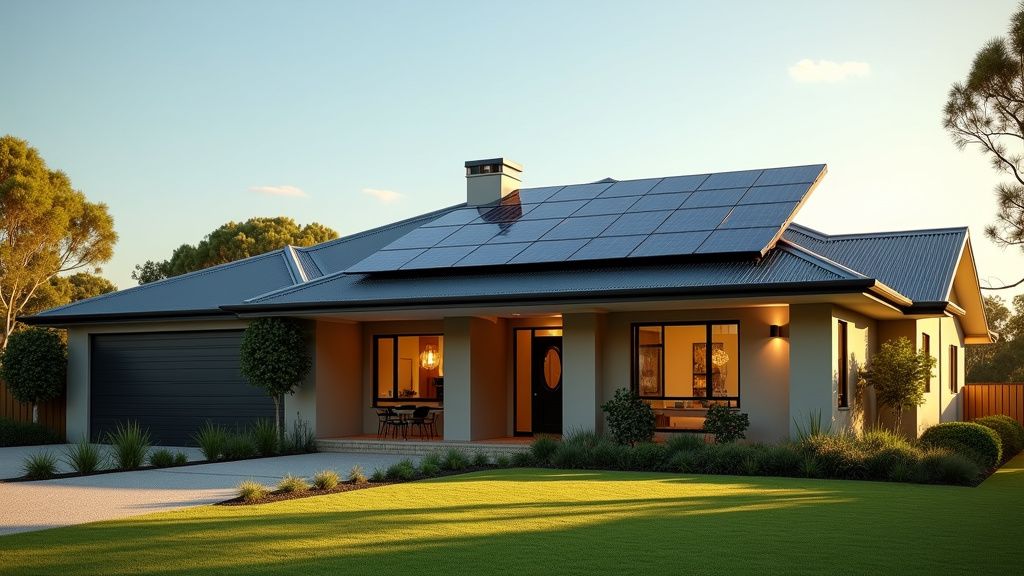
Decoding Solar Panel Wattage and Dimensions: An Aussie Guide
Thinking about making the switch to solar? Excellent choice, mate! But before you dive headfirst into the world of renewable energy, it's important to understand some key considerations, particularly when it comes to solar panel wattage and dimensions. This post will break down what you need to know to make informed decisions for your Aussie home or business. For a more detailed analysis, see our Complete Guide.
Understanding Solar System Size: It's All About Kilowatts (kW)
When we talk about the "size" of a solar system, we're referring to its total power-generating capacity, measured in kilowatts (kW). Think of it like the engine size of a car – the higher the kW, the more electricity the system can potentially produce. One kilowatt is equal to 1000 Watts.
So, how do you determine the right system size for your needs? Well, it's a bit like solving a puzzle with a few key pieces:
- Your Energy Consumption: This is arguably the most crucial factor. How much electricity do you use on a daily basis? Check your electricity bill for your average daily usage in kilowatt-hours (kWh). Australian households, on average, consume anywhere from 11 to 23 kWh per day. The more energy you use, the larger the solar system you'll likely need.
- Available Roof Space: The amount of sunny roof area you have available will impact the number of solar panels you can install. Limited space can restrict the system size, particularly in urban areas where roofs might be partially shaded.
- Budget: Solar systems are an investment, and the overall cost will depend on the size and components you choose.
The Wattage-Panel Count Connection
A solar system's size (kW) is determined by the number of panels and the wattage of each panel. For example, a common home solar setup might consist of 19 panels, each rated at 350 Watts. This would give you a total system size of 6,650 Watts, or 6.65 kW.
Panel wattage is essentially the panel’s power output under ideal conditions. Higher wattage panels produce more electricity, meaning you might need fewer panels to achieve your desired system size.
Dimensions Matter: Calculating Roof Space
Residential solar panels typically occupy an area of around 1.7 square metres each. Therefore, a 6.6 kW system could take up roughly 29-32 square metres of roof space, depending on the specific panel dimensions.
Keep in mind that panels can be installed in either portrait (vertical) or landscape (horizontal) orientation to optimise space utilisation and maximise sunlight capture. Consider consulting a professional installer to assess your roof and recommend the best panel layout.
Inverter Considerations: A Crucial Component
The inverter is a vital part of your solar system, converting the direct current (DC) electricity generated by the panels into alternating current (AC) electricity that your home can use. Interestingly, the inverter is often sized smaller than the total panel output. For example, a 6.6 kW solar system is frequently paired with a 5 kW inverter.
This might seem counterintuitive, but it’s a common practice because solar panels rarely operate at their full rated capacity. Oversizing the inverter can be unnecessarily expensive. Your solar retailer or installer can advise you on the correct inverter specifications for your specific system.
Important Note: If the total rated solar panel output exceeds the inverter manufacturer's specifications, you might not be eligible for the Australian Government's Small-scale Renewable Energy Scheme rebate. Be sure to discuss this with your installer.
Finding the Right Fit: Getting Expert Advice
Working out the ideal system size and design can be complex, so it's always best to seek professional advice. Solar retailers and installers use specialised software to determine suitable system configurations and estimate potential savings. Talk to them about the accuracy of these estimates and the assumptions behind their calculations.
Consider using online tools to get an initial estimate, but remember these are just guides. Your specific circumstances will determine the optimal system size.
Key Takeaways for Aussies
- Assess your energy needs: Know your average daily electricity consumption.
- Measure your roof space: Determine the available sunny roof area.
- Consider panel wattage and dimensions: Understand how they impact system size and space requirements.
- Don't forget the inverter: Ensure it's appropriately sized for your system.
- Seek professional advice: Consult with reputable solar retailers and installers.
By carefully considering these factors, you can make an informed decision about solar panel wattage and dimensions and choose the right solar system to power your home or business efficiently and sustainably. Happy solar-ing!
