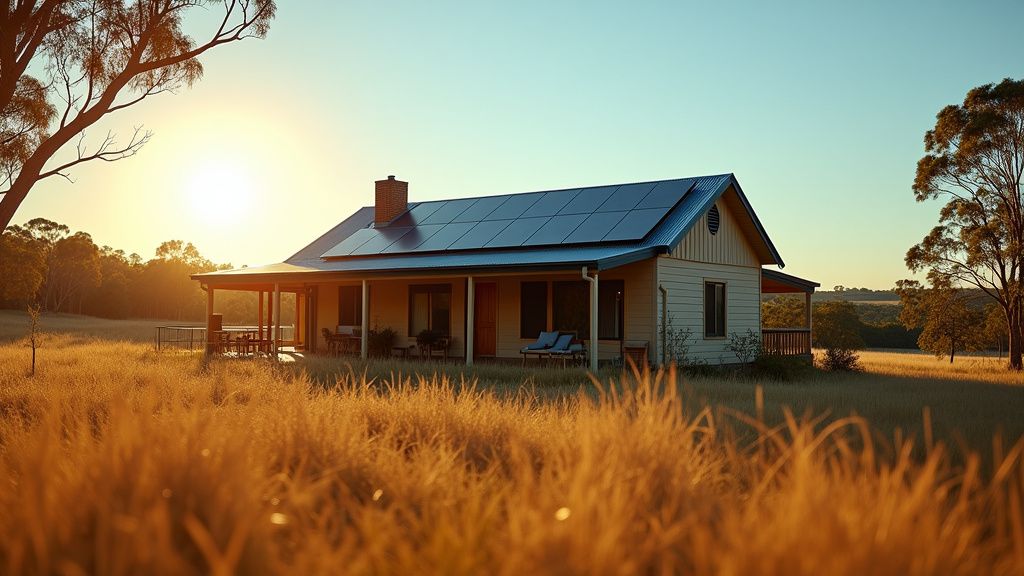
Solar Battery Storage: Powering a Rural Australian Revolution
For too long, Australians living in rural and remote communities have faced higher energy costs and unreliable power supply compared to their city counterparts. But thanks to the increasing affordability and efficiency of solar battery storage, a quiet revolution is underway, empowering these communities and offering a path towards energy independence. If you are considering joining the revolution, be sure to check out our Complete Guide for more information.
While Australia boasts world-leading adoption of rooftop solar, fully capitalising on this success requires strategic planning and investment, especially in rural areas. New research highlights the immense potential for Australians to benefit from increased uptake of rooftop solar paired with home batteries and widespread electrification. Getting the policy settings right is crucial to maximizing these benefits, ensuring lower power bills and a smoother transition to a clean energy future for everyone.
A Success Story Unfolding
The narrative is simple: families and businesses install solar panels to generate electricity during the day. Excess energy, instead of being fed back into the grid (often at a low price), is stored in batteries. This stored energy can then be used during peak hours, at night, or during power outages, providing a reliable and cost-effective energy source.
The impact is particularly profound in rural Australia where the grid infrastructure can be strained, resulting in frequent blackouts and voltage fluctuations. Solar battery storage offers a robust solution, providing a buffer against these grid vulnerabilities. This enhanced reliability is crucial for essential services like healthcare, agriculture, and small businesses that rely on a consistent power supply.
More Than Just Savings: Empowerment and Resilience
Beyond the immediate cost savings on electricity bills, solar battery storage offers a sense of empowerment and increased resilience. Rural residents are no longer entirely dependent on large energy companies and vulnerable to price hikes. They become active participants in their energy future, controlling their own supply and contributing to a more sustainable environment.
For farmers, this can translate to lower operational costs for irrigation, cooling, and other energy-intensive activities, improving their profitability and competitiveness. Small businesses can avoid costly disruptions caused by power outages, maintaining productivity and customer satisfaction. Families can enjoy greater peace of mind knowing they have a reliable backup power source during emergencies.
Addressing the Challenges
While the benefits are clear, challenges remain in ensuring widespread adoption of solar battery storage in rural Australia. The initial upfront cost can be a significant barrier for many households and businesses, despite the long-term savings. Government incentives, rebates, and financing options are crucial in making this technology more accessible.
Another challenge is ensuring that these systems are properly installed and maintained. Access to qualified installers and technicians can be limited in some remote areas. Investing in training and accreditation programs for local tradespeople is essential to building a skilled workforce capable of supporting the growing demand for solar battery storage.
Policy and the Path Forward
Industry experts believe that Australia’s journey towards full electrification has only just begun and incorporating even more customer energy resources (CER), at an accelerated rate, will be essential to lowering power bills. Moreover, it will expedite Australia’s energy transition. The modelling suggests that there is a real cost to not meeting the predicted targets of CER storage capacity.
Maximizing the opportunities for every Australian household and business requires coordinated planning and long-term vision from federal, state, territory, and local governments. Instead of focusing on supply-side challenges for CER and the grid, the policy recommendations should guide governments to unlock new opportunities for every Australian.
Looking Ahead
The future of energy in rural Australia is bright, powered by the sun and stored in batteries. As technology continues to improve and prices continue to fall, solar battery storage will become even more accessible and widespread. By investing in supportive policies, infrastructure, and training, we can unlock the full potential of this technology, empowering rural communities and building a more sustainable and resilient energy future for all Australians. The Clean Energy Council estimates that CER storage capacity is expected to increase significantly, while orchestrated capacity that is integrated into the grid will also see substantial growth by 2050. This signals a promising future for solar battery storage in rural Australia and across the nation.
