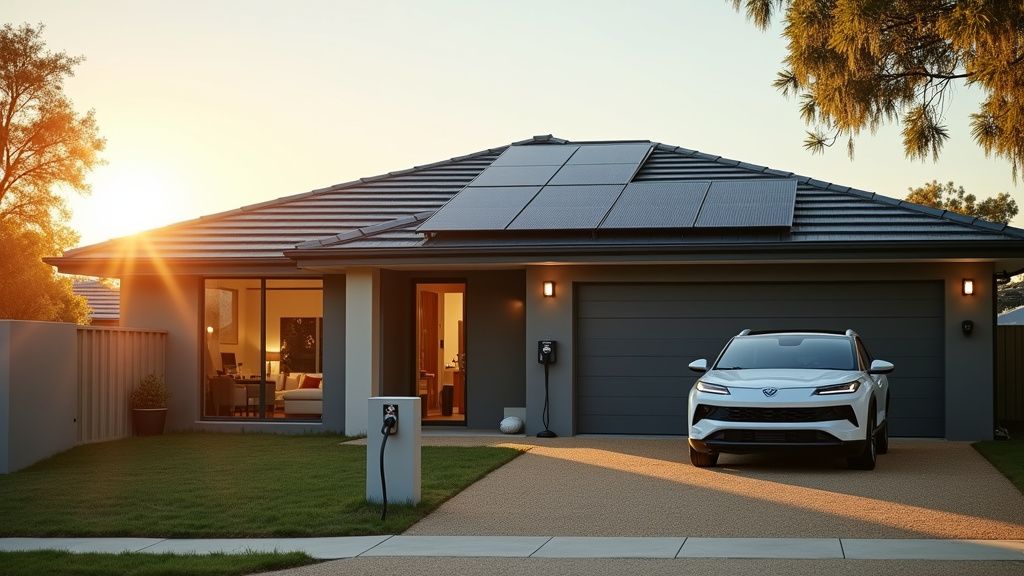
Level 2 Chargers and Solar Panels: Optimizing Your EV Charging System
Thinking of going electric? Congratulations! Electric vehicles (EVs) are becoming increasingly popular in Australia, and for good reason. They're better for the environment, often cheaper to run, and offer a smooth, quiet driving experience. A crucial part of EV ownership is charging, and that's where Level 2 chargers and solar panels come in. This blog post will explore how you can optimize your EV charging system by combining these two technologies. For a deeper dive, check out our Complete Guide.
Understanding Level 1 and Level 2 Charging
Let's start with the basics. There are different levels of EV charging, and understanding them is key to making informed decisions.
-
Level 1 Charging: This is the simplest option, using a standard Australian household power point (240V). It's often called "trickle charging" because it's the slowest. While convenient, it only delivers around 2.4 kW, potentially taking up to 24 hours to fully charge an EV battery. Level 1 charging is generally suitable for topping up your battery if you only drive short distances daily, like the average Aussie commute of around 33km. In most cases, this will only use approximately 10% of the battery. Charging this way overnight may be enough to replenish the used energy.
-
Level 2 Charging: This is where things get interesting for most EV owners. Level 2 chargers require professional installation by a licensed electrician as they connect directly to your home's power supply. These chargers deliver significantly more power, typically between 7 kW and 22 kW. This dramatically reduces charging times, adding roughly 30 to 80 km of driving range per hour of charging. If you regularly drive longer distances or want faster charging times, a Level 2 charger is the way to go.
The Power of Level 2 Chargers
A dedicated Level 2 home charging station offers several advantages:
- Faster Charging: As mentioned, the most significant benefit is speed. You can replenish your battery much faster than with Level 1 charging, making it more convenient for daily use.
- Smart Charging Capabilities: Many Level 2 chargers come with "smart" features. These allow you to schedule charging times, often taking advantage of off-peak electricity rates to save money. Some even allow you to monitor your charging progress remotely via a smartphone app.
- Increased Convenience: Having a dedicated charger at home eliminates the need to rely solely on public charging stations, providing greater flexibility and control over your charging schedule.
Combining Solar Panels and Level 2 Chargers: A Match Made in Heaven
Now, let's talk about the real game-changer: integrating your Level 2 charger with solar panels. This combination offers a compelling pathway to sustainable and cost-effective EV ownership.
Here’s why it works so well:
- Harnessing the Sun's Energy: By using solar panels, you can generate your own electricity, reducing your reliance on the grid and fossil fuels. This allows you to charge your EV with clean, renewable energy.
- Reducing Electricity Costs: Charging an EV can significantly increase your electricity bill. However, with solar panels, you can offset these costs by using self-generated solar power. Depending on the size of your solar system and your EV charging habits, you could potentially eliminate your EV charging costs altogether.
- Environmental Benefits: Charging your EV with solar power further reduces its carbon footprint, making it an even more environmentally friendly transportation option.
- Increased Energy Independence: Generating your own electricity provides greater independence from rising electricity prices and grid instability.
Optimizing Your Solar-Powered EV Charging System
To get the most out of your solar and Level 2 charger setup, consider the following:
- Solar System Size: The size of your solar system should be adequate to meet both your household electricity needs and your EV charging requirements. A solar installer can assess your energy consumption and recommend an appropriately sized system.
- Charging Schedule: If your Level 2 charger has smart charging capabilities, schedule charging to coincide with peak solar production hours. This will maximize the amount of solar energy used to charge your EV.
- Battery Storage (Optional): Adding a battery storage system to your solar setup can further enhance its effectiveness. The battery can store excess solar energy generated during the day and use it to charge your EV at night or during cloudy periods.
- Professional Installation: Ensure that both your Level 2 charger and solar panels are installed by qualified and licensed professionals. This will ensure safety, proper functionality, and adherence to Australian electrical standards.
Things to Consider
Before investing in a Level 2 charger and solar panels, keep these points in mind:
- Upfront Costs: Both solar panels and Level 2 chargers require a significant upfront investment. However, these costs can be offset by long-term savings on electricity bills and government rebates or incentives.
- Electrical Upgrades: Installing a Level 2 charger may require upgrades to your home's electrical panel and wiring. Consult with an electrician to determine if any upgrades are necessary. It’s important to refer to the EV’s manual regarding its specific charging requirements.
- Permitting and Approvals: Check with your local council regarding any permits or approvals required for solar panel and Level 2 charger installations.
Conclusion
Combining Level 2 chargers with solar panels is a smart and sustainable way to power your EV. By harnessing the sun's energy, you can reduce your electricity costs, minimize your carbon footprint, and enjoy a cleaner, greener driving experience. While there are upfront costs to consider, the long-term benefits of this integrated system make it a worthwhile investment for environmentally conscious EV owners.
