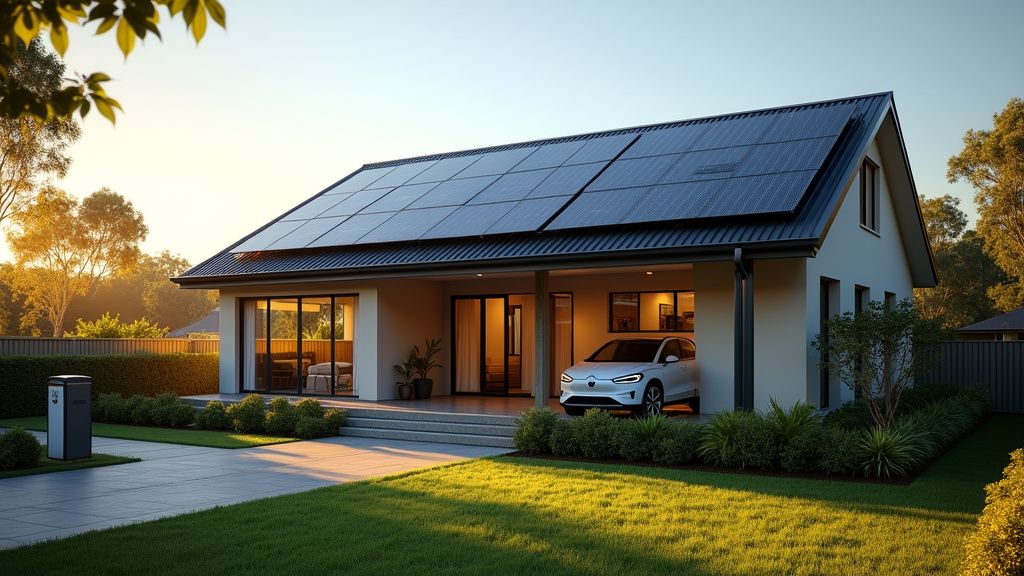
Powering Your Ride: Solar Panel Systems for Electric Vehicle (EV) Charging in Australia
G'day, solar enthusiasts! Here at SolarInsights, we're constantly exploring the latest trends in renewable energy, and one topic is generating a lot of buzz: using solar panels to charge electric vehicles (EVs). EVs are slowly but surely gaining traction in Australia, and coupling them with rooftop solar is a match made in sustainable heaven. Imagine driving on sunshine – reducing your carbon footprint and slashing your fuel bills at the same time!
But is it really that simple? Let's dive into what you need to know about powering your EV with solar energy.
The Rise of EVs and the Appeal of Solar Charging
Electric vehicles currently represent a smaller fraction of the total cars on Australian roads. However, the future looks bright for EVs. Major car manufacturers are investing heavily in electric models, and more and more Aussies are considering making the switch. Concerns about cost, charging infrastructure, and range anxiety are legitimate, but the advantages are becoming increasingly clear. EVs offer lower maintenance and running costs compared to petrol or diesel cars, and for those with rooftop solar, the potential for even greater savings is huge.
The most compelling aspect of combining solar panels with an EV is the ability to essentially eliminate your "fuel" costs. By using self-generated solar power to recharge your EV, you can significantly reduce or even eliminate your reliance on the electricity grid. This not only saves you money but also reduces your dependence on fossil fuels.
Understanding Your EV's Power Needs
Before you rush out to install more solar panels, it's important to understand your EV's energy consumption. EV battery capacity is measured in kilowatt-hours (kWh). Most EVs on the market have batteries ranging from around 24 kWh to 100 kWh or even larger. As a general guide, a vehicle with a 65 kWh battery can travel approximately 350 kilometers on a full charge, but this can vary depending on driving conditions and the efficiency of the vehicle.
Some EVs are more energy-efficient than others. Lighter and more aerodynamic models can use as little as 12 kWh per 100 km driven, while larger, high-performance EVs might consume 20 kWh or more for the same distance. Driving style also plays a role; higher speeds increase energy consumption. However, many EVs feature regenerative braking, which recovers energy during deceleration, especially helpful in stop-start city driving.
Solar System Size and Charging Strategies


While the dream of completely charging your EV every day solely from solar power is appealing, it's not always practical. Installing a solar panel system large enough to fully recharge a large EV battery daily, while also meeting your household's electricity demands, can be expensive and require significant roof space.
A more realistic approach is to focus on topping up your EV's charge daily. This is often enough to cover your daily commute and errands. A 2-6kW system expansion might be adequate to support a daily 100km drive, instead of trying to accommodate a full overnight recharge with solar only.
Consider the following:
- Your EV's battery capacity: A larger battery will require more solar power to charge.
- Your daily driving distance: The more you drive, the more solar power you'll need.
- Available sunlight hours: The more sunlight you receive, the more energy your solar panels will generate.
As a general rule, using a standard 6.5kW rooftop solar system, charging an average EV from 20% to 80% capacity can take the better part of a sunny day. The more sunlight you have, the better, especially in cooler climates where sunlight hours are limited.
Smart EV Chargers: Maximising Your Solar Savings
To truly maximise your savings and minimise your reliance on grid electricity, consider investing in a smart EV Charger. These chargers can be programmed to charge your EV primarily during daylight hours when your solar panels are generating the most power. This ensures you're using your own clean energy to power your vehicle, instead of drawing power from the grid at night.
Charging Times and System Considerations
The time it takes to charge your EV depends on factors such as battery condition, the type of charger used, and weather conditions. A larger 10kW solar system combined with a 7kW Type 2 charger could potentially charge an EV to 80% in around 6 hours on a sunny day. More powerful three-phase chargers paired with larger solar systems (e.g., 15kW) can reduce charging times even further, potentially reaching 80% in as little as 4 hours.
Keep in mind that these charging times assume minimal household energy consumption and ideal weather conditions.
Is Solar EV Charging Right for You?
If you're considering an EV and already have solar panels, or are planning to install them, the combination offers significant benefits. By carefully assessing your energy needs and choosing the right solar system and charging equipment, you can drive on sunshine, reduce your carbon footprint, and save money on your electricity bills. It's a win-win for your wallet and the environment.


