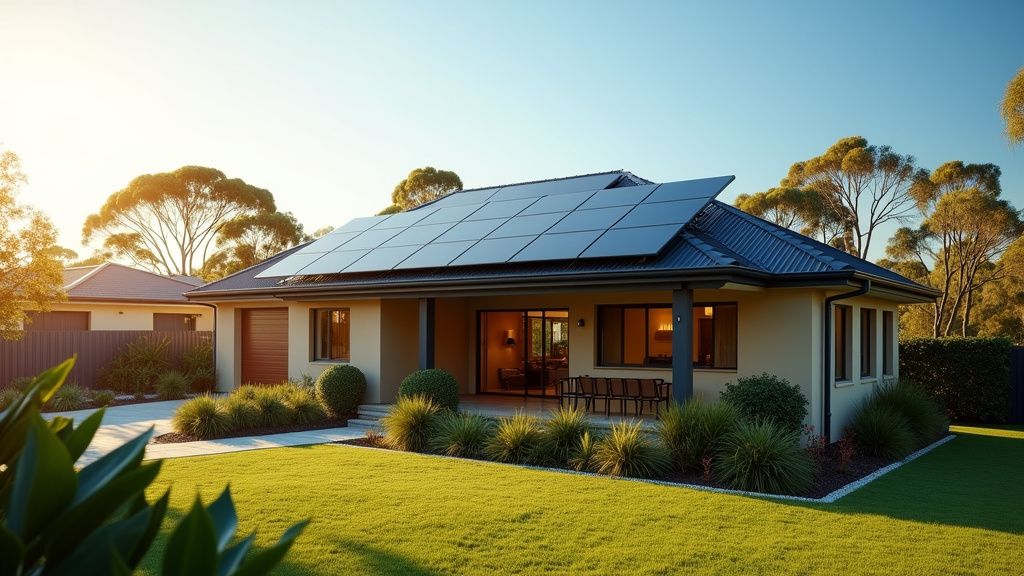
Hybrid Solar Systems: Combining Solar Power with Grid Connectivity in Australia
Are you looking to maximise your solar energy usage, gain greater energy independence, and safeguard yourself against power outages? Then a hybrid solar system might be the perfect solution for your Australian home or business. These systems are rapidly gaining popularity, blending the best features of both grid-connected and off-grid solar setups. For a more detailed look at this topic, check out our Complete Guide.
What is a Hybrid Solar System?
Essentially, a hybrid solar system combines a standard grid-tied solar system with battery storage. Unlike traditional systems that either rely entirely on the grid or operate completely independently, hybrid systems offer flexibility and control over your energy consumption.
Think of it this way: during the day, your solar panels generate electricity. This electricity first powers your home. Any excess electricity is then used to charge your batteries. If your batteries are full and you're still generating excess power, that electricity can be fed back into the grid, earning you feed-in tariffs.
When the sun isn't shining, or when your energy demand exceeds your solar production, your system will first draw power from your batteries. Only when your batteries are depleted will it switch to drawing power from the grid. This ensures a consistent power supply, day or night, rain or shine.
Benefits of Hybrid Solar Systems
So, why are more and more Australians choosing to invest in hybrid solar systems? Here are some key advantages:
- Energy Independence: Reduce your reliance on the electricity grid. This is particularly beneficial in areas with unreliable power supply or frequent blackouts, offering peace of mind and resilience.
- Backup Power: Hybrid systems with battery backup provide a safeguard against power outages. This is crucial for households with medical equipment, those who work from home, and businesses that can't afford disruptions. Imagine keeping the lights on, your internet running, and essential appliances working even when the rest of the street is in the dark.
- Maximised Solar Energy Use: Instead of sending all excess solar energy back to the grid, you can store it in batteries for later use. This significantly improves your return on investment (ROI) by allowing you to utilise your self-generated solar power during peak demand times, reducing your reliance on expensive grid electricity.
- Cost Savings: While the initial investment in a hybrid system might be higher than a standard grid-tied system, the long-term savings can be substantial. Reduced electricity bills, coupled with potential feed-in tariff earnings, can quickly offset the initial costs.
- Environmentally Friendly: By maximising your self-consumption of solar energy and reducing your reliance on fossil fuel-powered electricity, you're contributing to a cleaner and more sustainable future.
Is a Hybrid System Right for You?
Deciding between a hybrid solar system and other options, like a standard grid-tied or off-grid system, requires careful consideration of your specific needs and circumstances.
-
Consider a hybrid system if:
- You want to reduce your reliance on the grid.
- You experience frequent power outages.
- You want to maximise your use of solar energy.
- You are looking for long-term cost savings.
- You value energy independence and security.
-
An off-grid system might be more suitable if:
- You live in a remote area with no grid access.
- You are completely self-sufficient and don't want any grid connection.
-
A standard grid-tied system might be sufficient if:
- You have reliable grid access.
- Your primary goal is to reduce your electricity bill, and you don't mind feeding excess solar energy back into the grid at the current feed-in tariff rates.
The Future is Hybrid
Australia's energy landscape is evolving rapidly, with a growing emphasis on renewable energy sources. A hybrid solar system positions you at the forefront of this transition, allowing you to take control of your energy future. With rising electricity prices and advancements in battery technology, now is the ideal time to explore the benefits of a hybrid solar system. It offers a resilient, sustainable, and cost-effective solution for Australian homes and businesses alike.
