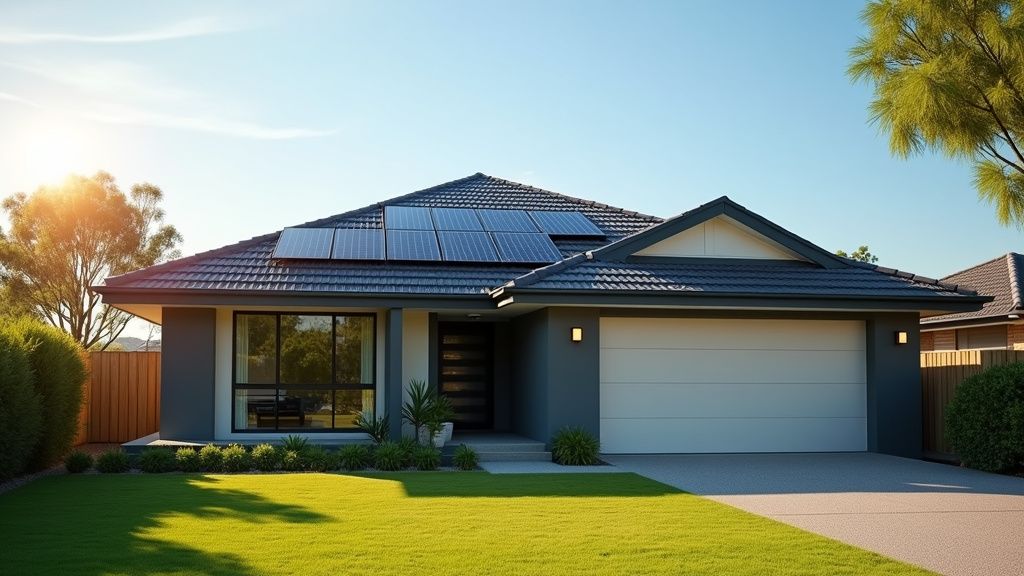
Solar Powering Your Aussie EV: Maximising Panel Output for Charging
Electric vehicles (EVs) are steadily gaining traction in Australia, and for good reason. With petrol prices remaining volatile and the increasing availability of affordable models, many Aussies are considering making the switch. One of the most appealing aspects of EV ownership, particularly for those with existing rooftop solar, is the potential to effectively eliminate fuel costs by charging with self-generated solar power.
But how much solar do you really need, and what factors impact your ability to charge your EV using the sun? It's not always as simple as plugging in and hoping for the best. This blog post will delve into the key elements affecting solar panel output for EV charging, helping you understand how to maximise your solar investment and drive into a greener future.
Before diving in, if you are interested in a detailed discussion on the topic, please read our Complete Guide.
Understanding EV Battery Capacity and Range
First, let's cover some basics. An EV's battery capacity is measured in kilowatt-hours (kWh). EVs on the market range from smaller batteries (around 24 kWh) to larger ones (over 100 kWh). A typical EV might have a 65 kWh battery, providing a range of roughly 350 kilometres, but this can vary significantly based on driving style and vehicle efficiency. Smaller, more efficient EVs might use as little as 12 kWh per 100km, whereas larger, performance-oriented models can consume 20 kWh or more for the same distance.
Keep in mind that driving speed affects range due to increased aerodynamic drag. However, many EVs now incorporate regenerative braking, which recovers energy during deceleration, boosting efficiency, particularly in urban environments.
The Reality of Solar EV Charging: Partial vs. Full Charging
While the dream of completely charging your EV daily with solar is appealing, the reality is that most households will find it more practical to focus on partial charging. Installing a solar system large enough to fully charge your EV and meet your household's energy demands can be costly and require significant roof space.
For example, while a larger solar system might be adequate to fully charge a smaller EV like a Nissan Leaf and power your home, it might not be sufficient for overnight charging or a larger EV.
Instead, targeting partial daily charging is a more manageable and cost-effective approach. A more realistic scenario is increasing the size of your solar panel installation by 2kW or 6kW, significantly reducing your grid dependence for EV charging without breaking the bank.
Key Factors Affecting Solar Panel Output for EV Charging
Several factors influence how effectively you can charge your EV with solar power:
- Solar System Size: This is a primary determinant. A standard 6.5kW rooftop solar system might take a full, sunny day to charge a standard EV from 20% to 80%. Larger systems (10kW or more) will naturally charge faster.
- EV Battery Capacity: The larger the battery, the more solar power you'll need to charge it.
- Sunlight Availability: This is crucial, especially in regions with less consistent sunshine. More sunlight equates to more power generation. Ideal charging conditions assume minimal home energy load and bright weather.
- Charger Type and Efficiency: Different EV chargers have different power outputs. A more efficient Type 2 charger can charge faster than a standard wall socket. A 7kW Type 2 charger coupled with a 10kW solar system may charge an EV to 80% in about 6 hours on a sunny day. Three-phase chargers, combined with larger solar systems (15kW), can reduce charging times even further.
- Time of Day: Charging during peak sunlight hours will obviously yield the best results.
- Weather Conditions: Cloud cover, rain, and even dust accumulation on your panels will reduce output.
- Panel Efficiency: Newer, higher-efficiency panels will generate more power from the same amount of sunlight.
- Panel Orientation and Tilt: The direction your panels face and their angle relative to the sun influence how much sunlight they capture.
Optimising Your Solar for EV Charging
Here are some tips for maximizing your solar panel output for EV charging:
- Size Your System Appropriately: Carefully consider your EV's battery capacity, your daily driving needs, and your household's energy consumption when determining the optimal solar system size.
- Consider Battery Storage: A home battery system allows you to store excess solar energy generated during the day and use it to charge your EV at night or during cloudy periods. This significantly increases your self-sufficiency.
- Invest in a Smart EV Charger: Smart chargers can be programmed to charge your EV only when solar energy is available, minimising your reliance on grid electricity.
- Monitor Your Energy Usage: Track your solar production and EV charging patterns to identify areas for improvement.
- Keep Your Panels Clean: Regularly clean your solar panels to remove dust and debris that can reduce their efficiency.
- Consider Panel Orientation: Ensure your panels are optimally positioned to capture the most sunlight throughout the day.
Solar EV Charging: A Sustainable Future
Charging your EV with solar power is a fantastic way to reduce your carbon footprint, save money on fuel costs, and increase your energy independence. By understanding the factors that affect solar panel output and taking steps to optimise your system, you can maximise the benefits of combining solar energy with electric vehicle ownership.
