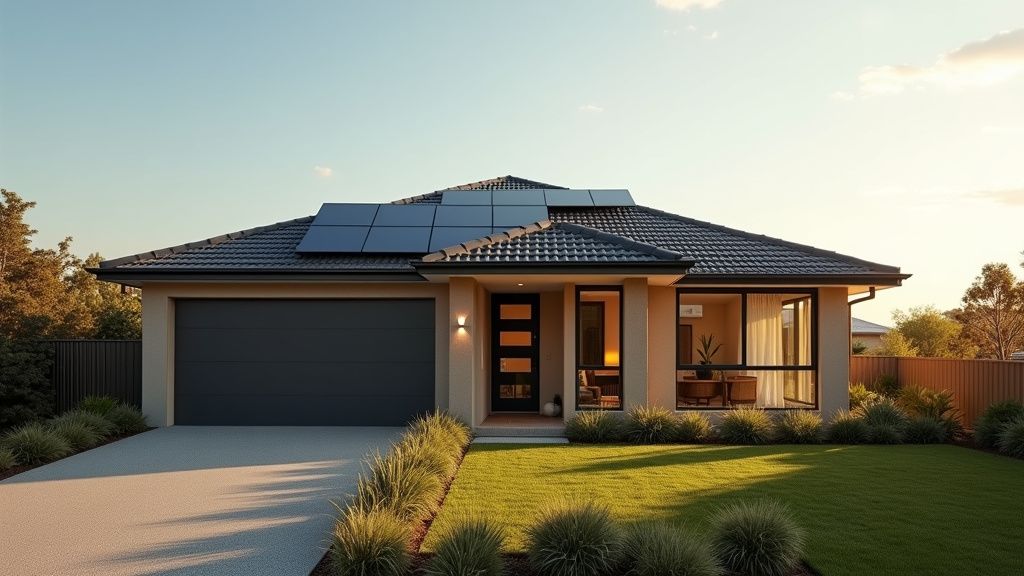
Power Up Your Future: Designing a Resilient Home Energy System
Australia's energy landscape is changing rapidly. With rising electricity prices and increasing awareness of our environmental impact, more and more Aussies are looking for ways to take control of their energy consumption. Designing a resilient home energy system, incorporating solar PV, battery storage, and smart grid integration, is a powerful way to achieve energy independence and contribute to a sustainable future.
But where do you start? Creating such a system can seem daunting, but breaking it down into its core components makes the process much more manageable. Consider reading this Complete Guide to learn more.
The Power Trio: PV, Battery, and Grid
A resilient home energy system revolves around three key elements:
-
Solar Photovoltaic (PV) Panels: These panels convert sunlight into electricity. The size and type of your solar array will depend on your energy needs, roof space, and budget. Consider factors like panel efficiency, shading, and orientation for optimal performance. A qualified solar installer can assess your property and recommend the most suitable system for your circumstances.
-
Battery Storage: Battery storage allows you to store excess solar energy generated during the day for use at night or during periods of low sunlight. This reduces your reliance on the grid and maximises the use of your self-generated renewable energy. Battery capacity is a critical consideration, and depends on your energy consumption patterns and desired level of energy independence. Lithium-ion batteries are the most common type for home energy storage due to their high energy density and lifespan.
-
Grid Integration: Connecting your solar and battery system to the grid allows you to sell excess electricity back to the grid (feed-in tariff) and draw power from the grid when your solar and battery are insufficient to meet your needs. A smart meter is essential for measuring electricity flow in both directions. Grid integration provides a safety net and ensures a continuous power supply, even on cloudy days.
Designing for Resilience: Key Considerations
Building a resilient system isn't just about installing panels and a battery; it's about designing a system that can withstand disruptions and adapt to changing conditions. Here are some crucial aspects to consider:
-
Sizing Matters: Accurately assessing your energy consumption is the first step. Analyse your past electricity bills to understand your energy usage patterns. Consider future energy needs, such as the addition of electric vehicles or appliances. Undersizing your system will limit its benefits, while oversizing can lead to unnecessary costs.
-
Backup Power: In the event of a grid outage, a battery backup system can provide power to essential circuits in your home, such as lighting, refrigerators, and medical equipment. Determine your critical power needs and choose a battery system with sufficient capacity to meet those needs.
-
Smart Energy Management: Smart home energy management systems can optimise energy usage by automatically controlling appliances and devices based on solar production, battery charge levels, and grid prices. This can further reduce your reliance on the grid and save you money. These systems often use sophisticated algorithms to learn your energy habits and make informed decisions.
-
Professional Installation: Proper installation is crucial for the safety, performance, and longevity of your solar and battery system. Choose a reputable and experienced installer who is accredited by the Clean Energy Council. Ensure they provide a comprehensive warranty and ongoing support.
-
Future-Proofing: Consider future technological advancements and evolving energy needs. Choose a system that is modular and expandable, allowing you to add more solar panels or battery capacity as needed. Stay informed about new developments in energy storage and smart grid technologies.
Navigating the Australian Landscape
Australia has some of the highest solar irradiance levels in the world, making it an ideal location for solar energy generation. However, the Australian energy market is also complex and regulated.
-
Government Incentives: Take advantage of government incentives, such as rebates and feed-in tariffs, to reduce the upfront cost of your solar and battery system. These incentives vary by state and territory, so research what's available in your area.
-
Grid Connection Requirements: Understand the grid connection requirements in your state or territory. You may need to obtain approval from your electricity distributor before connecting your system to the grid.
-
Addressing Grid Instability: The Australian Renewable Energy Agency (ARENA) is investing in research to address potential instability in the national energy grid caused by high levels of renewable energy generation. This research aims to develop tools that can identify and mitigate oscillations in the grid, ensuring a stable and reliable power supply. The increasing prevalence of inverter-based resources (like solar and batteries) can sometimes lead to such issues, and proactive solutions are being developed.
Is It Worth It?
Investing in a resilient home energy system is a significant decision, but the benefits can be substantial. It reduces your reliance on fossil fuels, lowers your electricity bills, increases your energy independence, and contributes to a cleaner environment. With careful planning, professional installation, and ongoing maintenance, a well-designed system can provide years of reliable and sustainable power.
