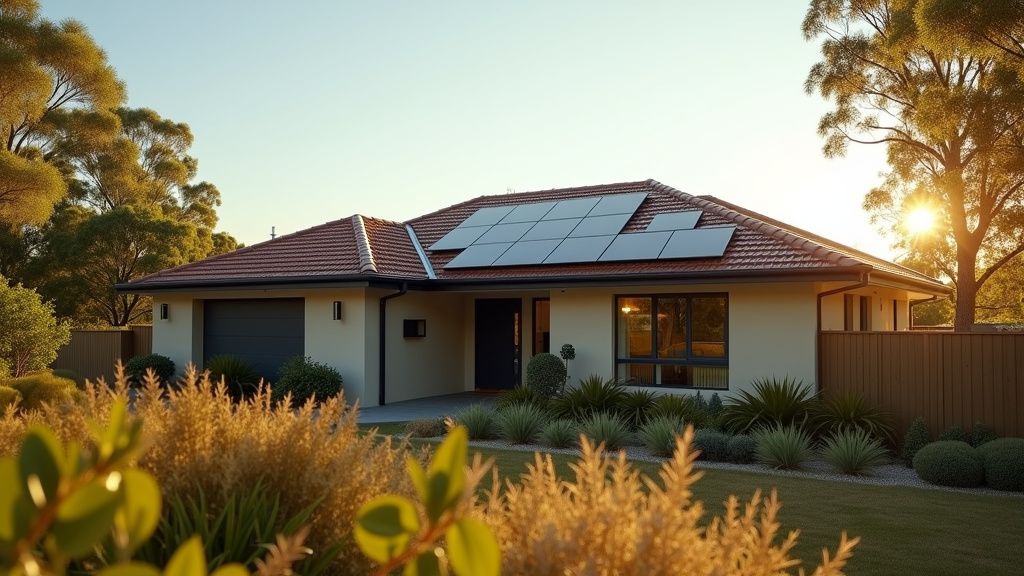
Demystifying Solar Battery Storage Systems for Aussie Homes
G’day folks! Ever looked at your rooftop solar panels and wondered if you could squeeze even more value out of them? The answer might be a solar battery storage system. These aren't just fancy gadgets; they're becoming an increasingly important part of the Australian energy landscape, allowing homeowners to become more self-sufficient and reduce their reliance on the grid. But what exactly are they, and are they right for you? Let's dive in.
For a deep dive into the inner workings, check out our Complete Guide.
What is Solar Battery Storage?
Essentially, a solar battery storage system is exactly what it sounds like: a battery that stores the excess electricity generated by your solar panels. Instead of feeding that surplus energy back into the grid (and receiving a feed-in tariff, which, let's be honest, isn't always amazing), you can store it for later use. This means you can power your home at night, during peak demand periods, or even during a blackout, significantly reducing your electricity bills.
Think of it like this: Your solar panels are the chefs, cooking up electricity. The battery is the fridge, keeping the delicious energy fresh until you're ready to eat (use) it.
How Does it Work?
The process is pretty straightforward:
- Sunlight hits your solar panels: The panels convert sunlight into direct current (DC) electricity.
- Inverter conversion: The DC electricity is converted into alternating current (AC) electricity by an inverter, the type of electricity used in your home.
- Powering your home: The AC electricity is used to power your appliances and devices.
- Excess energy storage: If your solar panels generate more electricity than you need at that moment, the excess is diverted to the battery for storage.
- Using stored energy: When your solar panels aren't producing enough electricity (e.g., at night or on cloudy days), the battery releases the stored energy to power your home.
Many modern systems include sophisticated software that optimises this process, intelligently deciding when to store energy, when to feed it back to the grid (if you choose to), and when to draw power from the grid.
Types of Solar Batteries
Several types of solar batteries are available, each with its own pros and cons:
- Lithium-ion batteries: These are the most common type, known for their high energy density, long lifespan, and relatively fast charging times. They are generally considered the best all-around option, although they can be more expensive.
- Lead-acid batteries: These are an older technology, generally cheaper than lithium-ion batteries, but they have a shorter lifespan, lower energy density, and require more maintenance. They are less commonly used in residential solar systems these days.
- Flow batteries: These are a newer technology that's starting to gain traction. They offer long lifespans and are potentially more environmentally friendly, but they are typically more expensive and bulkier than lithium-ion batteries.
Benefits of Solar Battery Storage
The advantages of investing in a solar battery system are numerous:
- Reduced Electricity Bills: This is the big one. By using stored solar energy instead of grid electricity, you can significantly lower your reliance on the electricity grid and reduce your bills.
- Increased Energy Independence: Become less vulnerable to rising electricity prices and grid outages.
- Backup Power: During a blackout, a battery system can provide backup power to keep essential appliances running, providing peace of mind. This depends on the specific system's configuration and capacity.
- Environmental Benefits: By using more solar energy, you reduce your carbon footprint and contribute to a cleaner environment.
- Potential for Higher Feed-in Tariffs: Depending on your retailer and location, some energy plans offer better feed-in tariffs for exporting excess energy at specific times, which a battery can help you manage.
Cost and ROI
The initial cost of a solar battery system can be significant, ranging from $8,000 to $20,000+ depending on the size and type of battery, the complexity of the installation, and any government rebates or incentives available in your state.
Calculating the return on investment (ROI) requires careful consideration of several factors, including your energy consumption patterns, the size of your solar system, electricity prices, feed-in tariff rates, and the lifespan of the battery.
Generally, a battery system is a better investment if you consume a significant amount of electricity during peak hours and if your feed-in tariff is low. Government incentives can also significantly improve the ROI.
Is Solar Battery Storage Right for You?
Consider these questions to help you decide:
- Do you use a lot of electricity during peak hours (evenings and mornings)?
- Is your current feed-in tariff low?
- Are you concerned about power outages?
- Do you want to reduce your carbon footprint?
- Are you willing to make a significant upfront investment?
If you answered "yes" to most of these questions, solar battery storage might be a worthwhile investment for your home.
Getting Started
If you're considering a solar battery system, it's crucial to:
- Assess your energy needs: Analyze your electricity bills to understand your consumption patterns.
- Get multiple quotes: Compare different battery systems and installation services from reputable installers.
- Check for rebates and incentives: Explore available government programs in your state.
- Understand the warranty: Make sure you understand the warranty terms for the battery and the installation.
Solar battery storage is a complex topic, but hopefully, this guide has helped demystify it. With careful planning and consideration, a solar battery system can be a valuable addition to your home, providing energy independence, reduced bills, and a cleaner environment. Happy solar saving, mates!
