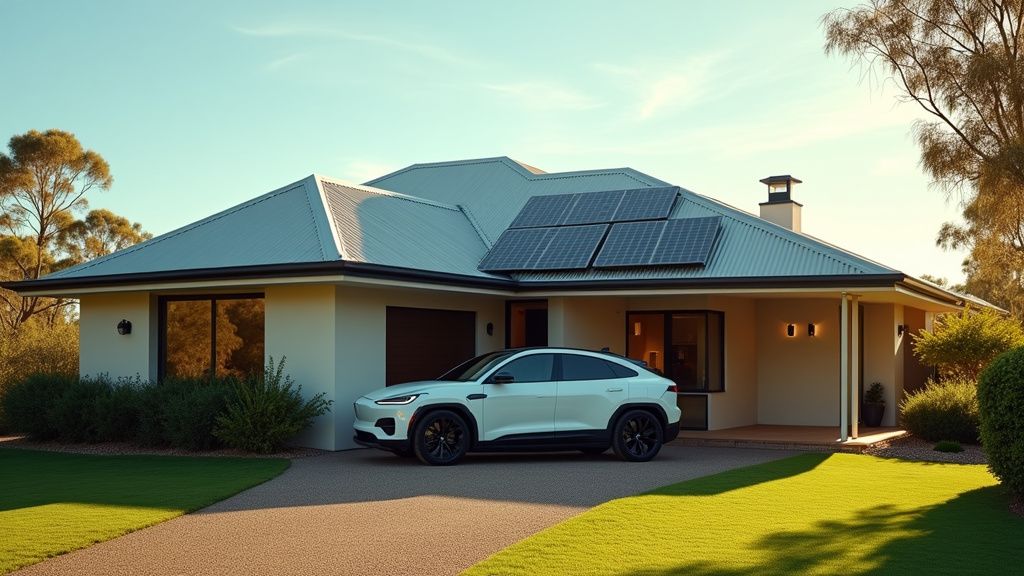
Solar-Charged EVs: Navigating the Aussie Landscape
Thinking about ditching petrol for electrons and harnessing the Aussie sun to power your electric vehicle (EV)? It's a brilliant idea that offers significant savings and reduces your carbon footprint. But transitioning to a solar-charged EV in Australia isn't always a walk in the park. It requires careful planning and consideration to truly maximise the benefits. Before you take the plunge, let's explore the key challenges and factors to keep in mind. For a Complete Guide to integrating solar and EV charging, check out our detailed resource.
1. Sizing Up Your Solar System:
The first hurdle is ensuring your solar panel system is adequate. Just like running your air conditioner on a hot day increases your electricity bill, charging an EV demands significant power. A standard household solar setup might not cut it, especially if you have other high-energy appliances.
To determine the right size, you need to assess your current energy consumption and factor in the EV's charging needs. Consider how many kilometres you drive daily and the EV's energy consumption per kilometre. This will give you a baseline for the amount of solar power you'll need dedicated to charging. Don't forget to account for household consumption, especially during peak hours.
While a smaller system might still contribute to your EV charging, you might find yourself still relying on the grid, diminishing the environmental and cost benefits. Some people opt for larger installations of say, 30kW, coupled with battery storage, to completely offset usage.
2. Battery Storage: Is it Worth it?
Battery storage, like a Powerwall, can significantly enhance the benefits of a solar-charged EV. Without battery storage, you're primarily relying on direct sunlight to charge your vehicle. This means you're limited to charging during daylight hours and might still need to draw from the grid during evenings or cloudy days.
A battery allows you to store excess solar energy generated during the day and use it to charge your EV at night or during periods of low solar production. This maximises your self-consumption of solar energy and minimises your reliance on the grid, resulting in lower electricity bills and a smaller carbon footprint. However, adding battery storage involves a significant upfront investment, so carefully weigh the costs against the long-term benefits.
3. Managing Charging Times and Load:
Even with a sizable solar system and battery storage, managing your EV charging schedule is crucial. Charging an EV consumes a considerable amount of energy, and doing so at the wrong time can strain your system and force you to draw power from the grid.
Consider staggering charging times, especially if you have multiple EVs. For example, start charging one car in the morning when solar production is high. Once it's fully charged, switch to the second car. This approach allows you to utilise solar power more efficiently throughout the day and minimise battery depletion.
Avoid charging during peak electricity demand periods, typically in the late afternoon and evening. Electricity retailers often charge higher rates during these times, negating the cost savings of solar charging.
4. Understanding Consumption Monitoring:
To effectively manage your solar-charged EV, you need to understand how much energy you are using, when, and where it is coming from. This is where "consumption monitoring" comes in. Think of it as an energy detective, using software and hardware (like your battery's gateway or IQ Controller) to track your energy usage patterns.
By monitoring your energy consumption, you can identify areas where you can improve efficiency and optimise your EV charging schedule. You might discover that you're using the most energy in the evening, prompting you to schedule EV charging during the day when solar production is at its peak.
5. Grid Connection and Feed-in Tariffs:
While the goal is to maximise self-consumption, you'll likely remain connected to the grid. This allows you to draw power when your solar system isn't generating enough, and to export excess solar energy back to the grid for a feed-in tariff.
Feed-in tariffs vary depending on your location and electricity retailer, so it's essential to compare offers and choose a plan that provides a competitive rate. Keep in mind that feed-in tariffs may not fully compensate for the cost of grid electricity, so prioritising self-consumption is always the most economical approach.
6. The Initial Investment:
Switching to a solar-charged EV involves significant upfront costs, including the purchase of the EV itself, the solar panel system, battery storage (if desired), and a compatible EV charger. It's crucial to carefully assess your budget and explore available government incentives and rebates to help offset the costs.
While the initial investment may seem daunting, remember that you'll be saving money on fuel and electricity bills in the long run. Plus, you'll be contributing to a cleaner and more sustainable future.
Conclusion:
Embracing a solar-charged EV lifestyle in Australia is a rewarding journey that offers significant environmental and financial benefits. However, it requires careful planning, system optimization, and a good understanding of your energy consumption patterns. By addressing the challenges and considering the factors outlined above, you can maximise the advantages of solar-powered driving and contribute to a greener future for Australia.
