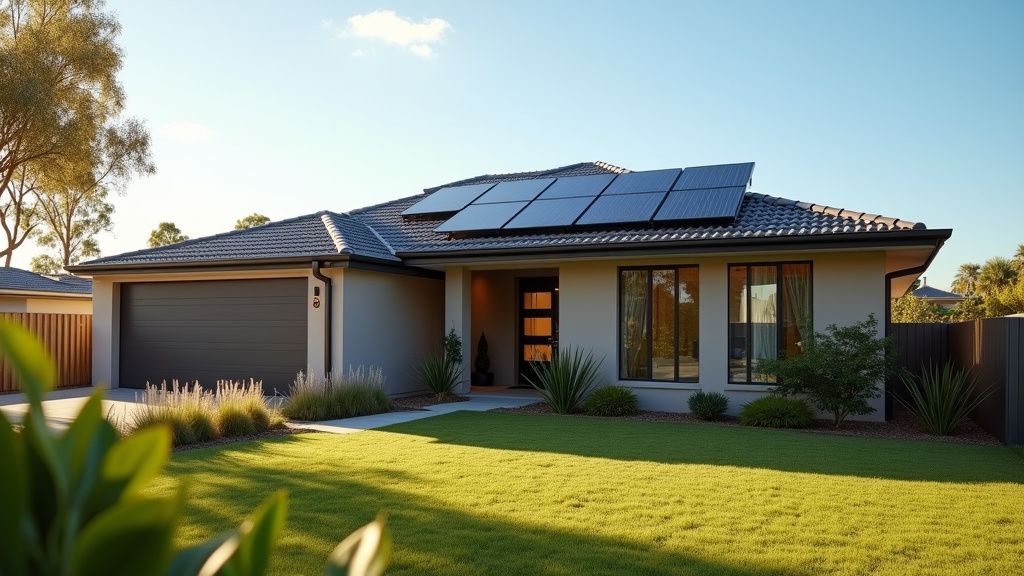
Powering Your Aussie Home: Calculating Solar Battery Storage Needs
Thinking about adding a battery to your solar system? Smart move! Solar battery storage is increasingly popular in Australia, allowing homeowners to maximise their solar energy usage, reduce reliance on the grid, and even gain energy independence. But figuring out the right size battery can be tricky. This guide will walk you through the key considerations for calculating your solar battery storage needs. For more in-depth information, see our Complete Guide.
Why Battery Storage?
Before diving into the calculations, let's quickly recap why battery storage is beneficial:
- Increased Self-Consumption: Store excess solar energy generated during the day to use at night or during cloudy periods, rather than feeding it back into the grid for a small feed-in tariff.
- Reduced Energy Bills: By using stored solar power, you'll draw less electricity from the grid, significantly lowering your bills.
- Backup Power: Some batteries provide backup power during blackouts, keeping essential appliances running.
- Energy Independence: Reduce your dependence on the electricity grid and gain greater control over your energy supply.
Understanding Your Energy Consumption
The first step is to understand how much electricity your household uses. This is crucial for determining the appropriate battery size.
- Check Your Electricity Bill: Your electricity bill is your best friend here. Look for the "average daily use" in kilowatt-hours (kWh). This figure represents your household's average electricity consumption per day. Australian homes typically use between 11 and 23 kWh per day, but your usage may vary.
- Analyse Your Usage Patterns: Daily average is a good starting point, but consider when you use the most electricity. Do you use a lot of power during the day (e.g., running air conditioning), or is your consumption higher in the evenings (e.g., cooking, watching TV)? This will influence how much energy you need to store for later use.
- Consider Seasonal Variations: Your electricity consumption may change depending on the season. For example, you might use more energy in summer for cooling and in winter for heating. Look at your bills from different times of the year to get a more accurate picture.
Assessing Your Solar Generation
Next, you need to understand how much solar energy your system generates.
- System Size: The size of your solar panel system (measured in kilowatts, or kW) is a key factor. A larger system will generate more electricity. The size of a solar panel system relates to the combined power-generating capacity of all the individual panels. For instance, a system with 19 panels, each rated at 350 Watts, would have a total capacity of 6.65 kW.
- Sunlight Hours: The amount of sunlight your roof receives each day also affects solar generation. This varies depending on your location and the time of year. Talk to your solar installer about estimated sunlight hours for your area.
- Inverter Size: Solar systems often pair a 6.6kW solar system with a slightly smaller 5kW inverter as the panels are rarely working at their full capacity.
- Estimate Production: A reputable solar installer can provide an estimate of your system's daily and annual energy production based on your location, system size, and roof orientation.
Calculating Battery Size
Now, let's put it all together to calculate your battery storage needs.
-
Determine Your Self-Consumption Goal: How much of your solar energy do you want to use yourself? Do you want to cover all your nighttime usage, or just a portion of it? This will depend on your budget and your desire for energy independence.
-
Estimate Nighttime Usage: Look at your energy usage patterns and determine how much electricity you typically use at night. This is the amount of energy you'll need to store in your battery.
-
Account for Depth of Discharge (DoD): Batteries have a "depth of discharge" rating, which indicates how much of the battery's capacity can be used without damaging it. For example, a battery with a DoD of 80% can only be discharged to 20% of its capacity.
-
Factor in Round-Trip Efficiency: Batteries lose some energy during the charging and discharging process. This is known as "round-trip efficiency." A typical battery has an efficiency of around 80-90%.
-
Calculation: The general formula for estimating battery size is:
Battery Size (kWh) = (Nighttime Usage (kWh) / DoD) / Round-Trip EfficiencyFor example, if your nighttime usage is 5 kWh, the DoD is 80%, and the round-trip efficiency is 90%, the required battery size would be:
(5 kWh / 0.8) / 0.9 = 6.94 kWhTherefore, you would need a battery with a usable capacity of at least 7 kWh.
-
Use Online Tools: SunSPOT is a free solar calculator built specifically to help homeowners. With an electricity bill handy, SunSPOT can provide a guide to the installed system cost, projected annual bill savings, emissions avoided and the payback period. You can add a battery and find out how it will impact the savings and the cost.
Important Considerations
- Future Energy Needs: Consider any future increases in your energy consumption, such as adding an electric vehicle or installing more appliances.
- Budget: Battery storage can be a significant investment. Determine your budget before you start shopping around.
- Professional Advice: It's always best to consult with a qualified solar installer to get a personalized assessment of your energy needs and the best battery storage solution for your home. They can provide expert advice and ensure that your system is installed correctly and safely.
Sizing your solar battery storage correctly is crucial for maximising your investment and achieving your energy goals. By understanding your energy consumption, assessing your solar generation, and using the calculation outlined above, you can make an informed decision and power your home with clean, renewable energy.
