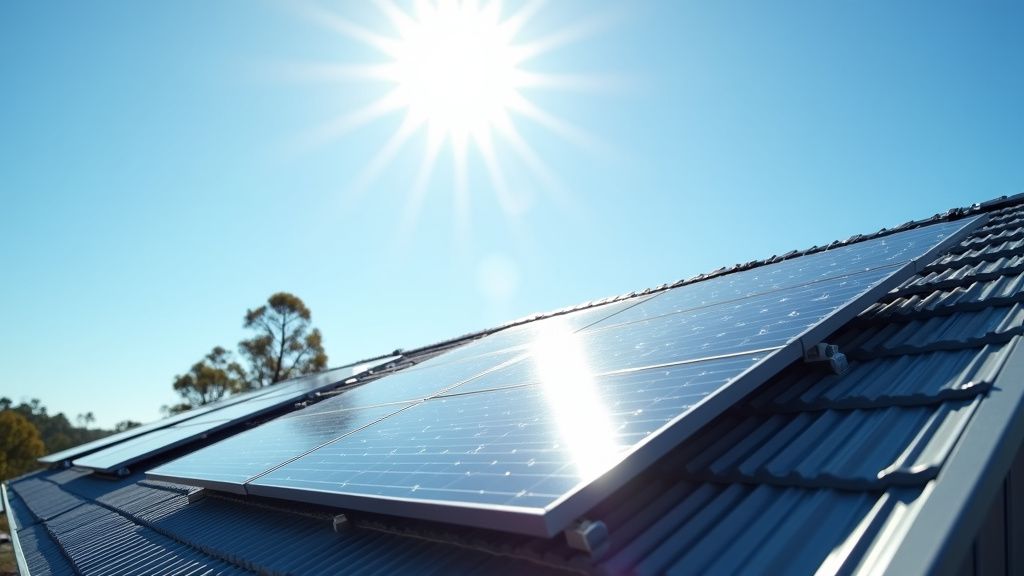
Will Limited Usage Affect Solar Battery Life? A Deep Dive for Aussie Solar Owners
Solar batteries are becoming increasingly popular in Australia, allowing homeowners to store excess solar energy and use it when the sun isn't shining. But like any investment, understanding how to maximise its lifespan is crucial. A common question is: does limited usage of your solar battery affect its longevity? The short answer is, it's complicated, but generally, the answer is no, it's beneficial. Let's unpack that.
Before we dive in, if you're after a comprehensive understanding of solar battery lifespans, make sure to check out our Complete Guide for a more in-depth look.
The Battery Life Basics: Cycles and Calendar Age
Solar battery lifespan is generally measured in two key ways: cycle life and calendar age.
-
Cycle Life: This refers to the number of complete charge and discharge cycles a battery can endure before its performance degrades to a specified level (typically around 70-80% of its original capacity). Think of it like filling and emptying a glass – how many times can you do it before the glass cracks or leaks?
-
Calendar Age: This simply refers to the chronological age of the battery, regardless of how often it's used. Batteries degrade over time, even when sitting idle, due to internal chemical processes.
So, What Happens When You Don't Fully Use Your Battery?
This is where things get interesting. Many people assume that fully using your battery – running it down to near empty and then fully recharging it – is the best way to prolong its life. However, this is often not the case.
Most modern solar batteries, particularly lithium-ion batteries which are prevalent in the Australian market, actually benefit from not being fully discharged regularly. Here's why:
-
Reduced Stress: Deep discharges put significant stress on the battery's internal components. Each deep cycle causes some degree of degradation. By limiting the depth of discharge (DoD), you reduce this stress and potentially extend the battery's cycle life. This essentially means you are making smaller withdrawals from the bank and are less likely to max out.
-
Optimal Operating Range: Lithium-ion batteries generally perform best within a certain operating range. Repeatedly pushing them to their extremes – either full charge or full discharge – can accelerate degradation. Keeping the battery within a more moderate state of charge (e.g., between 20% and 80%) can be beneficial. This is often referred to as operating in a "sweet spot".
-
Improved Voltage Stability: Limited usage can lead to more stable voltage levels, which reduces the likelihood of voltage drops that can affect connected appliances or equipment.
Think of it Like This: A Car Battery
Consider a car battery. If you only ever took short trips that didn't fully charge the battery and constantly drained it to near-empty every time you started the car, the battery would likely fail much sooner than if you took longer drives that allowed for a full charge and avoided deep discharges.
Practical Implications for Australian Solar Owners
So, how can you apply this knowledge to your solar battery setup?
-
Understand Your Usage: Monitor your energy consumption and solar production to determine whether you're regularly fully discharging your battery. If so, consider adjusting your settings or usage patterns.
-
Adjust Depth of Discharge (DoD) Settings: Many modern solar battery systems allow you to adjust the maximum depth of discharge. Consult your battery's manual or contact your installer to see if this is possible and what the recommended settings are for optimal lifespan. Setting a higher minimum state of charge (e.g., never letting it drop below 20% or 30%) can be beneficial.
-
Consider Time-of-Use Tariffs: If your electricity provider offers time-of-use tariffs with lower rates during off-peak hours, you might choose to rely more on grid power during these times, preserving your battery charge for peak demand periods. This means using your battery less overall.
-
Regular Maintenance: Schedule regular maintenance checks with a qualified solar technician to ensure your battery system is functioning optimally and to identify any potential issues early on.
But There’s a Catch… Capacity fade
While less usage can be good for cycle life and mitigating stress, under-utilization can also lead to capacity fade. Capacity fade is gradual reduction in a battery's energy storage capacity, happening slowly over time. Think of it as losing a small amount of water with each filling of a water container. Regular use, within recommended limits, can help maintain capacity and prevent the build-up of internal resistance.
The Bottom Line
In most cases, limited usage, meaning avoiding deep discharges and keeping the battery within a moderate state of charge, will likely extend the lifespan of your solar battery. However, it's a balance. Avoid extreme under-utilisation, aim for regular, moderate use, and always consult your battery manufacturer's recommendations for optimal performance and longevity. Remember, understanding your energy needs and adjusting your battery settings accordingly is key to maximising your investment in solar storage. And if you are thinking about purchasing a solar battery, think about your energy needs, and how much energy you are realistically likely to use. Buying a massive battery and only using a fraction of it is not ideal.
