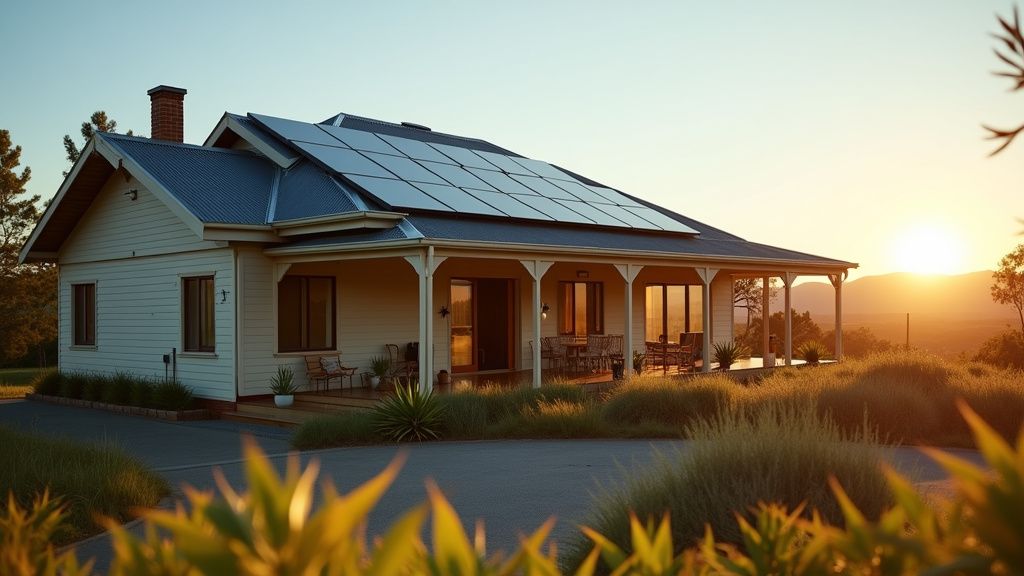
Plugging in the Sun: Why Grid Modernisation is Essential for Australia's Rooftop Solar Revolution
Australia is a world leader in rooftop solar. Homes and businesses across the country have embraced clean energy, with millions of systems now generating power. But this incredible success story is creating new challenges for our electricity grid. To continue harnessing the full potential of rooftop solar, we urgently need to modernise our grid infrastructure. Curious about the hurdles our increasing reliance on solar energy presents? Read our Complete Guide.
For decades, our electricity grid was designed to operate in one direction: from large, centralised power plants to homes and businesses. Now, thanks to rooftop solar, energy is flowing in both directions. On sunny days, excess solar power is exported back into the grid, supplementing traditional power sources. This is fantastic for reducing emissions and potentially lowering electricity bills, but it also places significant strain on the existing infrastructure.
The "Tidal" Power Problem
Imagine the power grid as a coastline. Traditionally, electricity demand rises and falls throughout the day, much like the tide. But with rooftop solar, we're seeing dramatic "tidal" swings in power flow. During the day, when solar generation is high, there's a surge of power flowing back into the grid. In the evening, when the sun goes down and everyone switches on their lights and appliances, demand spikes, and the grid has to compensate.
According to recent research, up to 40% of Australian homes now generate their own power via rooftop solar systems. When these homes produce more power than they consume, the surplus flows back into the electricity grid, essentially powering other homes and beyond. In some states, like South Australia, rooftop solar can even supply 100% of the state's electricity demand during peak sunlight hours.
These significant fluctuations can push local electricity networks to their capacity limits. To avoid blackouts and maintain a stable power supply, the grid needs to be able to handle these "tidal" surges effectively.
Phase Imbalance: A Hidden Hurdle
One of the biggest technical challenges is something called "phase imbalance." Our electricity grid uses a three-phase system to deliver power. Think of it like a three-lane highway. Ideally, the load should be evenly distributed across all three phases. However, most homes are connected to only one phase, and their energy consumption and generation patterns vary throughout the day.
This uneven distribution is exacerbated by the influx of rooftop solar power. When a large number of homes on the same phase are exporting excess solar energy, it can overload that phase while the others remain underutilised. This "phase imbalance" leads to inefficiencies, power quality problems, and network congestion, impacting the overall reliability and safety of the grid. It's like one lane of that three-lane highway being completely jammed while the other two are empty. In severe cases, significant phase imbalance can create safety hazards.
The Solution: A Smarter Grid
Modernising the grid is crucial to address these challenges and unlock the full potential of rooftop solar. This involves a range of upgrades and technologies, including:
-
Smart Inverters: Traditional inverters simply convert DC power from solar panels into AC power for use in homes and on the grid. Smart inverters, however, can do much more. They can actively manage power flow, respond to grid conditions in real-time, and even help balance the load across the three phases. Research is currently underway to develop and test innovative smart grid inverters designed to mitigate phase imbalance and maximise network utilisation.
-
Advanced Metering Infrastructure (AMI): Smart meters provide real-time data on energy consumption and generation, giving grid operators valuable insights into the state of the network. This data allows them to anticipate fluctuations and respond proactively to maintain grid stability.
-
Energy Storage: Batteries, both at the grid level and in homes, can store excess solar energy for later use, reducing the strain on the grid during peak demand periods. Battery storage helps smooth out the "tidal" swings and ensures a more reliable power supply.
-
Upgrading Infrastructure: Replacing aging infrastructure, such as transformers and power lines, is essential to handle the increased power flows associated with rooftop solar.
Investing in Our Future
Grid modernisation requires significant investment, but the benefits are substantial. A smarter grid will:
- Enable greater solar penetration: Allowing more homes and businesses to connect to the grid and generate clean energy.
- Improve grid reliability: Reducing the risk of blackouts and ensuring a stable power supply.
- Reduce energy costs: By optimising energy flow and reducing transmission losses.
- Support the transition to a clean energy future: Paving the way for a sustainable energy system powered by renewable sources.
Australia has a unique opportunity to lead the world in the transition to a clean energy future. By investing in grid modernisation, we can harness the full potential of rooftop solar and create a more reliable, affordable, and sustainable energy system for all Australians. It's an investment not just in our energy infrastructure, but in our future.
