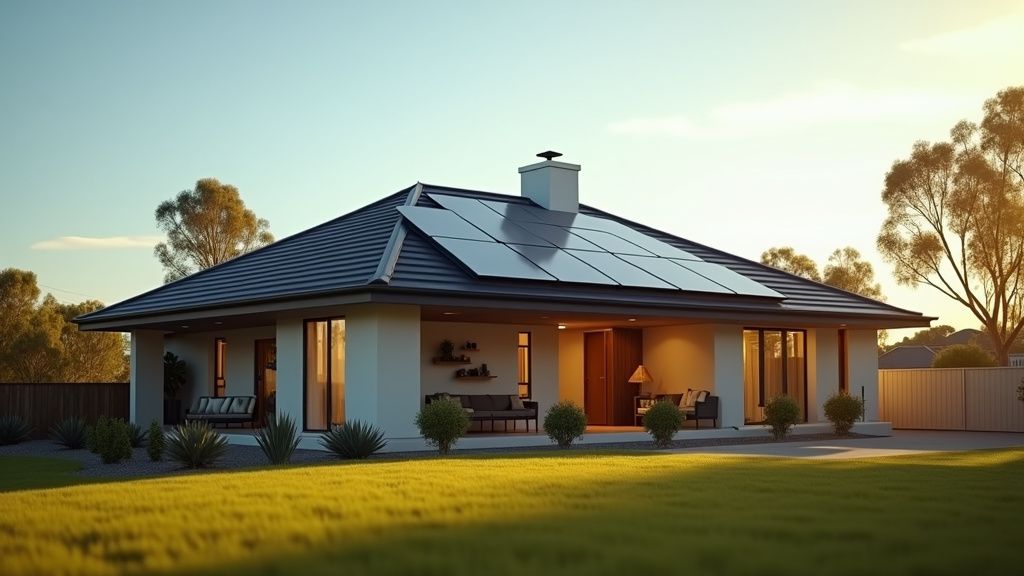
Solar Panel Efficiency: What to Expect in a Melbourne System
Thinking about going solar in Melbourne? That’s a brilliant move! But understanding solar panel efficiency is key to maximising your investment. In this blog post, we'll break down what you can expect from a solar system in Melbourne, covering everything from panel performance to factors that impact electricity generation. For a deeper dive into the world of solar, check out our Complete Guide.
Understanding Solar Panel Efficiency
Solar panels work by converting sunlight into electricity through the photovoltaic (PV) effect. They can harness both direct sunlight and the diffuse sunlight that penetrates clouds and the atmosphere. While solar panels will still produce power on cloudy days, they work most effectively when directly exposed to sunlight.
A solar panel's "rated capacity", measured in watts (W), indicates the power it can produce under "standard test conditions". These conditions represent a set of ideal scenarios, allowing for fair comparisons between different panels. Therefore, a 350W panel theoretically generates 350W under these precise circumstances. Keep in mind, however, that the actual power output will usually differ.
A typical home solar system uses multiple panels, and the system's size is measured in kilowatts (kW). For example, a system with 19 panels rated at 350W each would have a total capacity of 6.65kW under standard test conditions.
Factors Affecting Solar Panel Output in Melbourne
Several factors impact the actual electricity generated by your solar panels in Melbourne:
- Sunlight Availability: Melbourne's climate means varying sunlight hours throughout the year. Summer months provide significantly more sunlight than winter, directly impacting energy production.
- Panel Orientation and Tilt: The direction your panels face and their angle relative to the sun greatly influence their efficiency. North-facing panels typically generate the most electricity in Australia.
- Panel Degradation: Over time, solar panels degrade, meaning their power-generating capacity gradually reduces. The performance warranty for your panels will specify the maximum degradation expected over their lifespan.
- Shading: Obstructions like trees or buildings that cast shadows on your panels will reduce electricity generation.
- Temperature: Solar panels perform best at specific temperatures. Excessively high temperatures can slightly reduce their efficiency.
- Panel Efficiency: This refers to the percentage of sunlight a panel converts into electricity. Higher efficiency means more power from the same amount of sunlight.
What Power Output Can You Expect?
Electricity production is measured in watt-hours (Wh) or kilowatt-hours (kWh). Under standard testing conditions, 1kW of solar panels will ideally generate 1kWh of electricity in one hour. On average, across a whole year, 1kW of solar panels in Australia generates between 3.5 kWh and 5 kWh of electricity per day. Of course, Melbourne's latitude and weather patterns will put it towards the lower end of this range compared to sunnier states.
Think of it like this: the wattage is like the flow rate of water coming from a tap, while kilowatt-hours represents the total volume of water collected over time.
Therefore, a 6.6kW system in Melbourne could potentially generate anywhere from 23 kWh to 33 kWh on a clear, sunny day. However, the average daily output will vary seasonally. You can expect less generation in winter and more in summer.
Panel Size and Efficiency: Maximising Limited Roof Space
The physical dimensions of a solar panel, combined with its efficiency rating, determine its overall power output. For panels of the same size, a more efficient panel will generate more power. Typical panels used in residential systems are roughly 1 metre wide by 1.7 metres long, though larger sizes are available.
If you have limited roof space, investing in higher-efficiency panels is particularly beneficial. While they may come with a slightly higher upfront cost, they allow you to maximise electricity generation from the available area. Solar panel manufacturers are constantly innovating, leading to increasingly efficient panels becoming available.
Working With Your Installer
A reputable solar retailer or installer will carefully consider all these factors when designing your solar system. They'll assess your roof's orientation, shading issues, and energy consumption needs to recommend the optimal system size and panel efficiency for your Melbourne home. Discuss your energy goals and budget with your installer to find the perfect solar solution.
Going solar is a smart and sustainable choice. By understanding solar panel efficiency and the factors influencing performance, you can make informed decisions and enjoy the benefits of clean energy for years to come.
