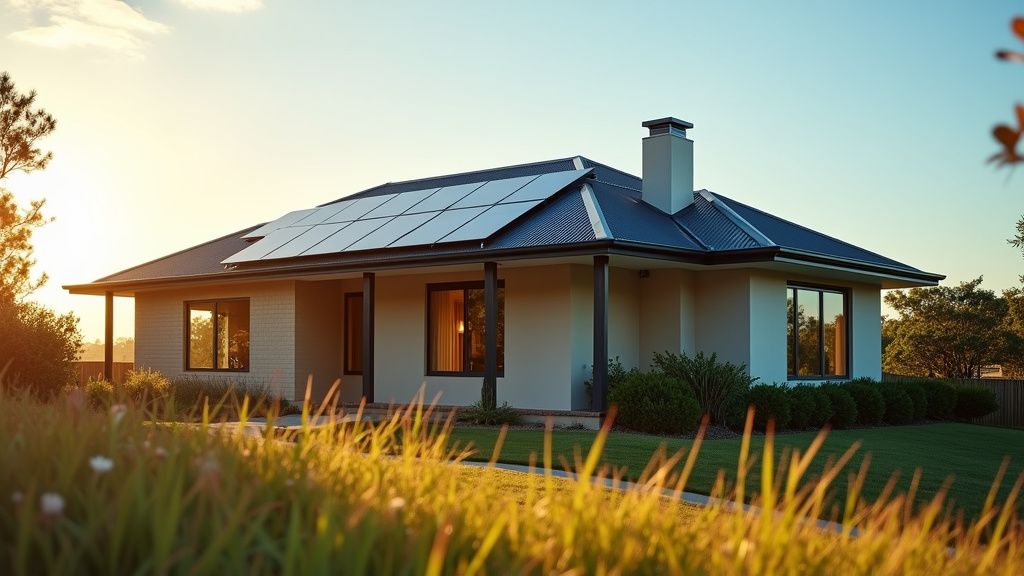
Solar Inverter Sizing: Maximising Efficiency for Aussie Homes
Thinking about installing solar panels or upgrading your existing system? One of the most crucial decisions you'll make is choosing the right size solar inverter. The inverter is the unsung hero of your solar setup, responsible for converting the Direct Current (DC) electricity generated by your panels into Alternating Current (AC) – the type of electricity that powers your home and feeds back into the grid. Getting the inverter size right is key to optimising your solar panel system's efficiency and overall energy production. This guide will walk you through the ins and outs of solar inverter sizing, helping you make informed decisions for your Australian home. For further in-depth information, check out our Complete Guide.
Why Inverter Sizing Matters
The inverter's efficiency is directly linked to the efficiency of your entire solar panel system. Think of it as a translator; if the translator isn't performing well, the message gets garbled. An inverter operates most efficiently within a specific operational "window" – a range of power input it's designed to handle effectively. This range is detailed in the inverter's specifications.
As the power generated by your solar panels fluctuates throughout the day due to sunlight intensity, the inverter's ability to efficiently convert DC to AC changes. The goal is to size the inverter so that it operates within its optimal range for the majority of the day. If the power input falls outside this optimal range, the inverter's efficiency decreases, leading to wasted energy and reduced savings.
Undersizing vs. Oversizing: The Australian Perspective
The big question is: should you undersize or oversize your inverter relative to your solar panel array? While it might seem counterintuitive, undersizing the inverter has become a common and often preferred practice in Australia. Let's explore why.
-
Undersizing (or Overclocking): This involves using an inverter with a slightly lower capacity than the total capacity of your solar panels. It's become increasingly popular and, within certain limits, is perfectly acceptable. The reasoning is that your solar panels rarely produce their maximum rated power output for the entire day. Factors such as location, climate, panel orientation, and shading can all reduce the amount of sunlight hitting your panels.
With an undersized inverter, the maximum power output of your system will be "clipped" or capped at the inverter's rated capacity during peak sunlight hours. For example, a 5kW inverter will limit the output to 5kW, even if your panels are theoretically capable of producing more at that moment.
-
The Benefits of Undersizing: While clipping may sound undesirable, it can actually lead to increased overall energy production. Here's why:
- Improved Efficiency at Lower Input: A smaller inverter turns on earlier in the morning and shuts off later in the afternoon, capturing more of the available sunlight during these periods. It also operates more efficiently with lower DC inputs.
- Offsetting Clipping Losses: The energy gained in the early morning and late afternoon often compensates for the energy lost due to clipping during peak hours.
-
Oversizing: This means using an inverter with a larger capacity than the total capacity of your solar panels. While it might seem like a safe bet, it's generally not recommended unless you plan to expand your solar panel array in the future. An oversized inverter often operates at a lower efficiency, especially during periods of low sunlight, leading to energy wastage.
The 133% Rule
It's important to note that there are rules and guidelines in place to prevent excessive inverter undersizing. The Clean Energy Council (CEC) in Australia allows accredited installers to oversize the solar panel capacity by up to 33% compared to the inverter capacity. This means that for a typical 5kW inverter, you can install up to 6.6kW of solar panels. This is to ensure the safety and efficient functioning of the system.
Working with Your Installer
Choosing the right inverter size can be complicated, so it's crucial to work with a qualified and accredited solar installer. They will assess your specific energy needs, location, panel orientation, and other factors to determine the optimal inverter size for your system. They will also be familiar with the CEC guidelines and best practices for inverter sizing.
Don't hesitate to ask your installer questions about their sizing recommendations and the rationale behind them. A reputable installer will be transparent and provide you with a clear explanation of the benefits and drawbacks of different inverter sizes.
Conclusion
Properly sizing your solar inverter is essential for maximising the efficiency and energy production of your solar panel system. While undersizing has become a common practice in Australia, it's crucial to stay within the guidelines set by the Clean Energy Council and work with a qualified installer. By understanding the principles of inverter sizing and working with a knowledgeable professional, you can ensure that your solar system operates at its peak performance, saving you money and reducing your carbon footprint. Remember to check out our Complete Guide for even more details!
