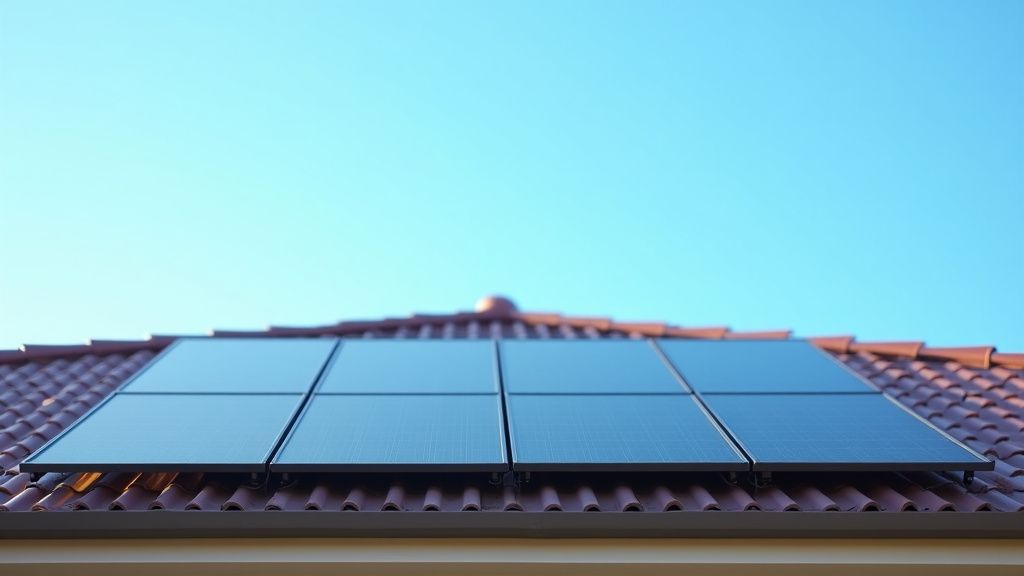
Solar Power for Aussie Homes: Your Guide to Rebates and Loans
G'day, solar enthusiasts! Thinking about joining the solar revolution and slapping some panels on your roof? It's a cracking idea – good for the planet, and even better for your wallet in the long run. But let's be fair dinkum, wading through the available government rebates and loan schemes can feel like navigating a maze. Don't you worry, this guide will break it down, so you can understand what's on offer and how to snag those savings. For a more in-depth look into solar rebates, check out this Complete Guide.
Harnessing the Sun with a Little Help from the Government
The good news is, both the Australian government, and our state and territory governments, are keen to help you make the switch to solar. They offer various incentives to lighten the upfront cost of installing solar panels on your home or business roof. Let's get into the details of what’s available:
1. The Australian Government's Small-scale Renewable Energy Scheme (SRES)
Consider the SRES as the big kahuna of solar support. It operates through a system of Small-scale Technology Certificates (STCs). When you install a solar system that meets the eligibility requirements, you become entitled to a certain number of these STCs. These certificates essentially represent the environmental benefits generated by your clean energy system.
How it Puts Money Back in Your Pocket:
Your solar installer typically handles the process of applying for and selling these STCs on your behalf. The monetary value of the STCs then gets factored into your quote as a discount on the total system cost. Think of it as an immediate rebate, making your solar system more affordable right off the bat.
Eligibility is Key:
To qualify for STCs, there are a few boxes you need to tick:
- Your solar system must be brand new and meet Australian standards.
- It needs to be installed by a Clean Energy Council (CEC) accredited installer.
- The system must be designed and installed according to CEC guidelines.
Calculating Your STC Value:
The number of STCs you're entitled to is based on how much electricity your solar system is estimated to generate between now and 2030. This calculation takes into account things like:
- The size of your solar system (kW capacity).
- Your geographical location (sunnier areas get more STCs).
- The angle and orientation of your roof.
Important Note: When you sign a contract with your solar installer, you're essentially assigning the ownership of the STCs to them in exchange for that upfront discount on your system. It's a win-win!
2. Cheaper Home Batteries Program (Coming 1 July 2025)
The Australian Government is giving an extra push towards home battery storage. Starting July 1st, 2025, the Cheaper Home Batteries Program will provide a discount of approximately 30% on the upfront cost of installing eligible small-scale batteries. This program is also being delivered through the SRES. This means you’ll probably see the discount applied through your solar and battery retailer or installer.
This is a fantastic way to get the most out of your solar investment. By storing excess energy, you can use it when the sun isn't shining, such as during the evenings or on cloudy days. This reduces your reliance on grid electricity.
Community Solar Banks Program
If you reside in an apartment building or another multi-unit dwelling, the Community Solar Banks Program might be right up your street. This initiative helps finance the installation of shared solar and clean energy technology in these kinds of residences. It helps make renewable energy more accessible to people who might not be able to install individual rooftop systems.
Don't Forget to Check Your State and Local Options
Many states and territories offer their own specific rebates, loans, or other initiatives to encourage solar adoption. These programs usually have specific eligibility criteria and funding availability. This means that it's worth doing your homework on your state government's website. A quick online search for "[Your State/Territory] solar rebates" should point you in the right direction.
Finally, have a chat with your local council. Some councils offer extra incentives like rebates for solar hot water systems or energy efficiency upgrades that can enhance your solar investment.
Final Thoughts
Going solar is a significant decision, but with some careful research and planning, you can successfully navigate the rebates and loans landscape. You'll soon be powering your home with clean, affordable energy. Good on ya for making the smart choice!
