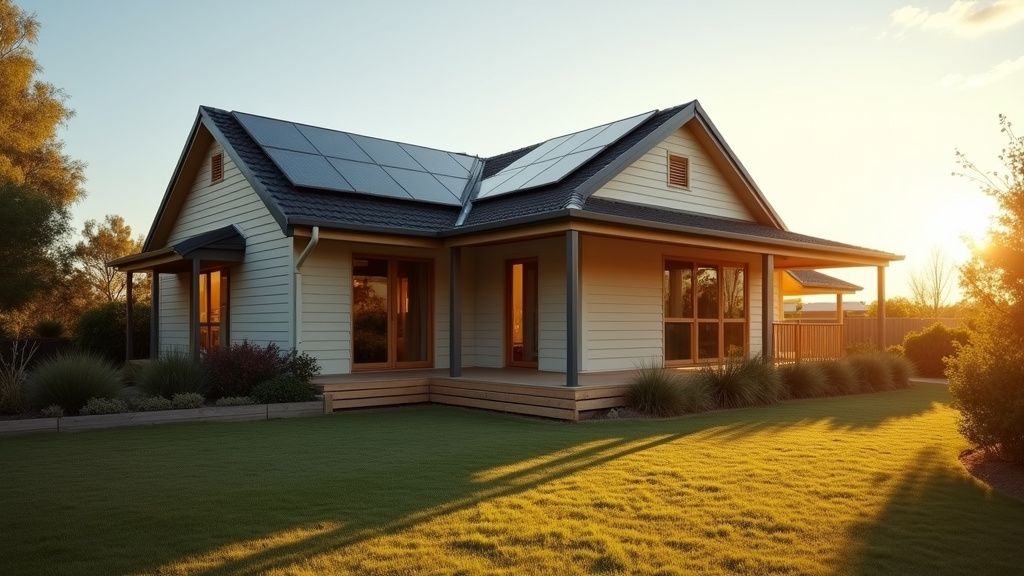
Power Up Your Pad: Aussie Home Battery System Considerations
Thinking about adding a battery to your solar setup, mate? It's a big decision, and one that requires careful consideration. As an independent journalist for SolarInsights, I'm here to break down the key factors so you can make an informed choice. Before you jump in, check out our Complete Guide to get a solid grounding in the basics.
Why Consider a Home Battery System?
The Aussie sun is a powerful resource, and rooftop solar systems are booming. But what happens when the sun dips below the horizon, or you're using more power than your panels are generating? That's where a battery system comes into play.
Essentially, a battery lets you store excess solar energy generated during the day and use it later, when you need it most. This can significantly reduce your reliance on the grid, saving you money on your electricity bills and increasing your energy independence.
The Cheaper Home Batteries Program: What You Need to Know
Good news is coming on July 1, 2025! The Australian Government is rolling out the Cheaper Home Batteries Program. This program aims to reduce the upfront cost of installing small-scale battery systems for homes and businesses, by providing a discount. This is an expansion of the existing Small-scale Renewable Energy Scheme (SRES).
The government will reportedly fully fund the discount by purchasing the equivalent volume of small-scale technology certificates created for batteries.
To be eligible, battery systems will need to be accredited by the Clean Energy Council (CEC) and listed on their approved products list. Keep an eye out for more details as the launch date approaches.
Is a Battery Right for You? Key Considerations
Before you rush out and buy a battery, ask yourself these questions:
- Do you have a suitable solar system? A battery is most effective when paired with a solar system that generates more electricity than you typically use during the day. If your solar system is too small, you might not have enough excess energy to store, making the battery less worthwhile.
- What are your energy consumption patterns? Do you use most of your electricity during the day, when your solar panels are generating power, or in the evenings, when the sun has gone down? A battery is more beneficial if you have significant evening or nighttime energy usage.
- What is your budget? Battery systems can be a significant investment. Consider the upfront cost of the battery, installation, and ongoing maintenance. While the Cheaper Home Batteries Program may help reduce the initial expense, it's still crucial to evaluate the long-term financial benefits.
- Do you experience frequent power outages? One of the key advantages of a battery system is the ability to provide backup power during blackouts. If you live in an area prone to grid outages, a battery can provide peace of mind and keep essential appliances running.
- Export Limits: Is your system limited regarding exporting power back to the grid? If so, you may be losing power that could be stored in a battery and used later.
Understanding Battery System Setups
There are a couple of common solar and battery configurations to be aware of:
- Grid-connected with battery backup: This is the most common type of system. It allows you to store excess solar energy and use it later, and also provides backup power during outages.
- Off-grid system: These systems are completely independent of the electricity grid. They rely entirely on solar and battery power, and are typically used in remote areas where grid access is limited.
During a power outage, a battery system can be configured to power your entire home or only selected circuits. You might choose to prioritise essential circuits like lighting, refrigeration, and water pumps. Keep in mind that you'll need to manage your electricity use carefully during an outage to avoid overloading the battery.
Virtual Power Plants (VPPs) and Your Battery
An interesting aspect of the Cheaper Home Batteries Program is the requirement for on-grid battery systems to have virtual power plant (VPP) capability. A VPP is a network of distributed energy resources, like solar panels and batteries, that are coordinated to act as a single power source. By participating in a VPP, you can potentially earn additional income by allowing your battery to support the grid during peak demand periods.
Getting Expert Advice
Choosing the right battery system can be complex, so it's always best to seek advice from a qualified solar retailer or installer. They can assess your energy needs, recommend the appropriate battery size and configuration, and provide you with a detailed quote.
Under the Cheaper Home Batteries Program, battery retailers, designers, and installers are required to provide you with written statements outlining key information about the battery and installation. This includes details about performance, warranty, and safety features.
Adding a battery to your solar system can be a great way to save money, increase your energy independence, and reduce your carbon footprint. By carefully considering your needs and exploring the available options, you can make the right choice for your home and your wallet.
