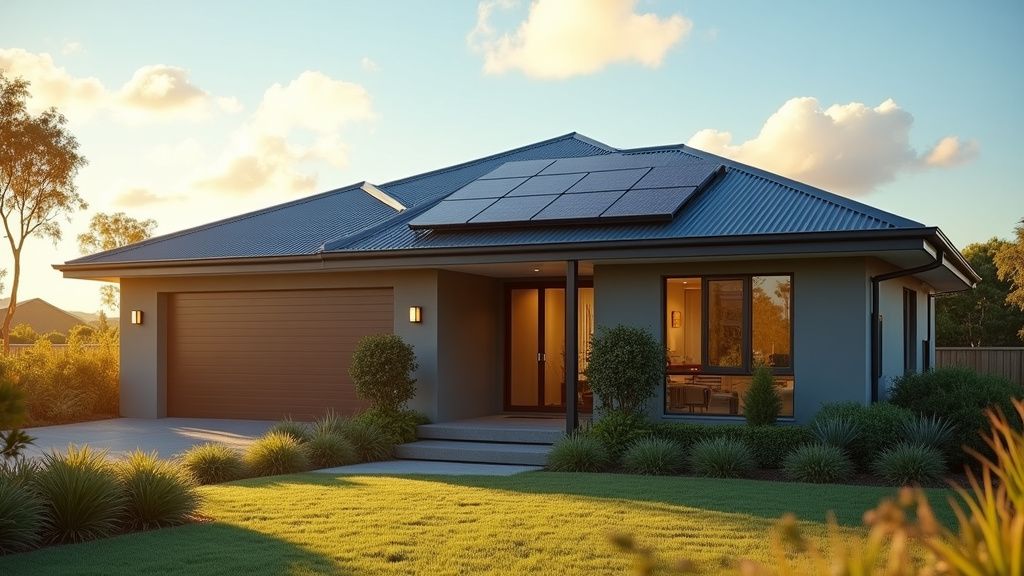
Home Battery Storage vs. Solar Batteries: Decoding the Power Jargon for Aussie Households
G'day solar enthusiasts! As Australia continues to bask in the glory of being a world leader in rooftop solar adoption – with over a third of households now harnessing the sun's energy – the question of what to do with all that excess power is becoming increasingly important. That's where battery storage comes in, offering a way to bank your sunshine for later use. But with terms like "home battery storage" and "solar batteries" floating around, it's easy to get lost in the jargon.
So, what is the difference? Well, buckle up, because in reality, there isn't one! The terms "home battery storage" and "solar batteries" are generally used interchangeably. They both refer to the same technology: a system that allows you to store surplus electricity generated by your solar panels for use when the sun isn't shining, like during the evening or on cloudy days.
Confused? Don't be! Think of it like this: a "solar battery" is simply a type of "home battery storage" specifically designed to work in conjunction with a solar panel system. It's like saying "ute" versus "car" - a ute is a type of car, but designed for a specific purpose. If you want to dive deeper, check out our Complete Guide.
Why Bother with Battery Storage?
Now that we've cleared up the terminology, let's delve into why you might want to consider adding a battery to your solar setup:
- Slash your power bills: By storing solar energy, you can significantly reduce your reliance on the grid, particularly during peak hours when electricity prices are highest. Savings can be substantial, potentially reaching up to $2300 per year when combining solar and battery storage, compared to around $1500 with solar alone.
- Become more energy independent: Reduce your dependence on the grid and take control of your energy consumption. A battery lets you use the power you generate, even when the sun's not out.
- Backup power: Some batteries can provide backup power during blackouts, ensuring essential appliances keep running. This can be a lifesaver during storms or other emergencies.
- Environmental benefits: By using more of your own renewable energy, you reduce your carbon footprint and contribute to a cleaner environment.
- Virtual Power Plants (VPPs): Many government incentives now favour batteries that can participate in a VPP. This connects your battery to a network, allowing you to sell excess stored power back to the grid during peak demand, earning you extra income and supporting grid stability.
The Cost Factor: Is it Worth it?
Let's be honest, home battery storage isn't cheap. Currently, you're looking at around $4,000 for a smaller 5kWh battery, with a typical Australian home requiring a system costing between $10,000 and $13,000.
However, prices are falling, driven by technological advancements and lower lithium costs. This means the payback period – the time it takes for the battery to pay for itself through savings – is also decreasing. In 2024, the average payback period is around 8.3 years, compared to 10 years in 2022 and a whopping 19 years in 2016!
Considering the average Australian stays in their home for around nine years, batteries are becoming a more accessible and financially viable option.
Government Assistance and the Future of Battery Storage
The good news is that government incentives can significantly reduce the upfront cost of a home battery. Programs like the Australian Government's Cheaper Home Batteries Program offer subsidies that can cut the cost by around 30%, making the payback period even shorter. This program offers discounts through the existing Small-scale Renewable Energy Scheme (SRES).
Furthermore, the rise of VPPs is transforming the energy landscape. By participating in a VPP, you not only save money on your power bills but also contribute to a more stable and resilient grid. Coordinating battery storage across homes and businesses could potentially save billions in grid-scale infrastructure investment.
Is a Battery Right for You?
Ultimately, the decision of whether or not to invest in home battery storage depends on your individual circumstances. Factors to consider include:
- Your energy consumption: How much electricity do you use, and when do you use it?
- Your solar panel system size: Is it adequately sized to generate enough surplus energy to charge a battery?
- Your location: Are there any local government incentives or rebates available?
- Your budget: Can you afford the upfront cost of a battery?
- Your long-term plans: How long do you plan to stay in your home?
While home battery storage might not be the perfect fit for everyone, it's an increasingly attractive option for Australians looking to save money, increase their energy independence, and contribute to a greener future. With prices falling and government support growing, now is a great time to explore the possibilities.
