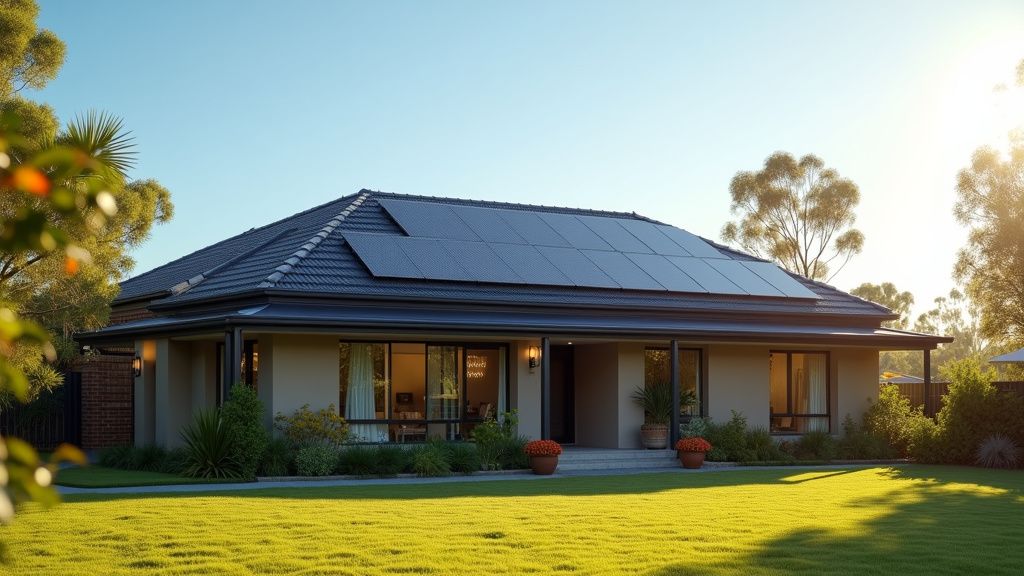
Harnessing the Sun: A Guide to Australian Government Solar Rebates and Loans
Thinking of going solar? You're not alone! More and more Australians are turning to the sun to power their homes and businesses, and for good reason. Solar energy is not only environmentally friendly but can also significantly reduce your electricity bills. But the initial cost can be a barrier. Thankfully, the Australian government, along with state and territory governments, offer a range of rebates and loan programs to help make solar more accessible. Let's break down what's available to you. For those of you in New South Wales, here is a Complete Guide.
The Small-scale Renewable Energy Scheme (SRES)
The cornerstone of Australian government support for solar is the Small-scale Renewable Energy Scheme (SRES). This nationwide initiative effectively lowers the upfront cost of most new rooftop solar systems for both homes and businesses. The SRES operates through the creation of Small-scale Technology Certificates (STCs).
Essentially, when you install an eligible solar system, you're entitled to a certain number of STCs. Your solar retailer or installer typically handles the process of claiming and selling these certificates, and the value is then passed on to you as a discount on the overall system price. Think of it as an instant rebate applied at the point of purchase.
The number of STCs you receive depends on several factors, most importantly the estimated amount of electricity your solar system is projected to generate between now and 2030. This calculation takes into account your location, the size of your system, and other relevant factors. To ensure eligibility for STCs, it's crucial that your system is installed by a Solar Accreditation Australia accredited installer and that the solar panels and inverter are on the Clean Energy Council approved lists. Make sure to clarify these requirements with your installer. By signing a contract with your solar retailer or installer, you agree to transfer the ownership of these STCs to them, in return for the immediate discount.
Cheaper Home Batteries Program
Exciting news for those considering battery storage! From July 1, 2025, the Australian Government's Cheaper Home Batteries Program, implemented as an expansion to the SRES, aims to reduce the cost of installing a battery alongside your solar system. This program offers a substantial discount, targeting around 30% off the upfront cost of eligible small-scale batteries.
Like the SRES for solar panels, the discount is typically applied through your solar and battery retailer or installer at the point of sale. This program is designed to encourage greater uptake of battery storage, allowing households to store excess solar energy generated during the day and use it when the sun isn't shining, further reducing reliance on the grid.
Community Solar Banks Program
Recognising that not everyone can install their own solar system, particularly those living in apartments or multi-unit dwellings, the Australian Government has launched the Community Solar Banks Program. This initiative supports the installation of shared solar and clean energy technology in these buildings, helping lower electricity costs for up to 25,000 households.
These "solar banks" provide access to the benefits of solar energy for renters, apartment dwellers, and others who might otherwise be excluded. The program is a partnership between the Australian Government and state and territory governments.
State and Territory Rebates and Loans
While the SRES and the Cheaper Home Batteries Program are national initiatives, various state and territory governments, and even some local councils, offer additional rebates and loan programs to further incentivise solar uptake. These programs vary significantly from state to state and can change frequently, so it's crucial to investigate what's available in your specific location.
These state-based incentives can take various forms, including:
- Upfront rebates: Direct financial assistance to reduce the purchase price of a solar system or battery.
- Interest-free or low-interest loans: Offering accessible financing options to spread the cost of installation over time.
- Feed-in tariffs: Payments for excess solar energy exported back to the electricity grid (while technically not a rebate, they contribute to overall cost savings).
Doing Your Homework
Navigating the world of solar rebates and loans can seem complex, but the potential savings are well worth the effort. Here are some key steps to take:
- Research: Start by exploring the Australian Government's energy website for information on the SRES, Cheaper Home Batteries Program and Community Solar Banks Program.
- Check State and Territory Websites: Investigate the specific rebates and loans available in your state or territory.
- Talk to Accredited Installers: Get quotes from multiple Solar Accreditation Australia accredited installers and ask them to clearly outline all applicable rebates and discounts in their proposals.
- Compare Offers: Don't just focus on the upfront price. Consider the long-term savings potential, system warranties, and the installer's reputation.
By taking the time to understand the available government support, you can significantly reduce the cost of going solar and enjoy the many benefits of clean, renewable energy.
