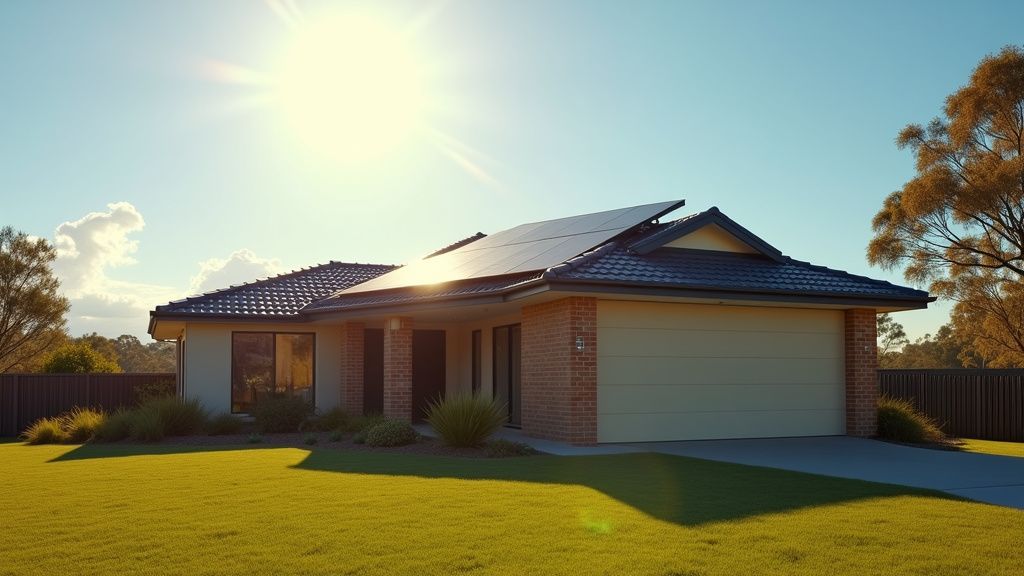
SolarInsights: Choosing the Right Solar Panel for Harsh Australian Environments: A Guide
Australia's intense sun, searing heat, and sometimes unpredictable weather can be tough on solar panels. Choosing the right panel isn't just about saving money on your electricity bill; it's about ensuring your investment lasts and performs optimally for years to come. Before we dive in, if you're looking for even more information, check out our Complete Guide.
So, how do you pick the perfect solar panel for your Aussie home? Let's break down the key considerations and panel types.
Factors to Consider Before You Buy:
- Climate: Australia's diverse climate means your panel choice needs to reflect your location. Coastal areas need panels that resist salt spray, while inland areas require panels that can handle extreme heat and dust.
- Roof Space: Limited roof space? You'll want higher-efficiency panels to maximise energy generation. Plenty of room? You might be able to opt for a more budget-friendly, less efficient option.
- Budget: Solar panel costs vary considerably. Balance upfront costs with long-term savings and panel lifespan.
- Energy Needs: How much electricity do you use? This will determine the size of your solar system and, consequently, the number and type of panels you require.
- Aesthetics: Let’s be honest, the appearance of your panels matters. Some panels are sleeker and more visually appealing than others.
Understanding the Different Types of Solar Panels:
The solar panel market offers different technologies each with their own strengths and weaknesses. Here’s a run down of the most common types available in Australia:
-
Monocrystalline Panels: These panels are the black sheep (literally!) of the solar world. Made from a single, pure silicon crystal, they boast high efficiency (typically 17% to 22%) and excellent performance in both high temperatures and low-light conditions. This makes them a great choice for Australian households with limited roof space but a desire for maximum energy generation. The downside? They tend to be more expensive upfront. However, their increased efficiency and longevity can make them a worthwhile long-term investment.
-
Polycrystalline Panels: Sporting a bluish, speckled appearance, polycrystalline panels are made from multiple silicon fragments melted together. They are generally less efficient than monocrystalline panels (around 13% to 17%) but also more affordable. If you have ample roof space and are working with a tighter budget, polycrystalline panels could be a good option. However, it’s important to note that their performance can suffer in extreme heat, which is a definite consideration for homes in particularly hot parts of Australia. They are a reliable and dependable solution for homeowners who aren't necessarily looking for the most cutting-edge technology but still want a solid solar system.
-
Thin-Film Solar Panels: Thin-film panels are lightweight and flexible, often made from materials like cadmium telluride or amorphous silicon. While this flexibility allows them to be integrated into curved surfaces or unconventional designs, they have a lower efficiency (around 10% to 13%) and shorter lifespans compared to crystalline panels. Due to their large size requirements, they are not typically used for residential rooftops in Australia, but they can be useful for commercial buildings, portable applications, and off-grid systems where flexibility and weight are key considerations.
-
Bifacial Solar Panels: These innovative panels are designed to capture sunlight from both the front and rear surfaces. When installed on a reflective surface (like a white gravel roof), they can harness additional energy from indirect sunlight. Under optimal conditions, their efficiency can surpass that of traditional panels. While initially popular for large-scale commercial projects, bifacial panels are increasingly being adopted in residential settings. Usually monocrystalline-based, they come with a higher price tag but offer exceptional performance when strategically positioned to maximize sunlight capture. Their sleek, glass-on-both-sides design also appeals to homeowners who prioritize aesthetics.
-
PERC Technology: PERC (Passivated Emitter and Rear Cell) technology isn't a standalone panel type but an enhancement applied to monocrystalline or polycrystalline cells. It involves adding a layer to the back of the cell that allows it to capture more sunlight and convert it into electricity, particularly in low-light or high-heat conditions. PERC panels are becoming increasingly common in Australia due to their ability to boost efficiency without significantly increasing costs. They're particularly beneficial in regions with high sun exposure, like Western Australia, where maintaining performance at peak temperatures is crucial.
Making the Right Choice for Your Home:
Ultimately, the best solar panel for your home depends on your individual circumstances and priorities.
- Maximising Output in Limited Space: Monocrystalline or PERC-enhanced panels are your top contenders.
- Budget-Conscious with Ample Space: Polycrystalline panels remain a viable option.
- Prioritising Aesthetics or Portability: Thin-film or bifacial panels might offer a unique solution.
Before making a decision, get quotes from several reputable solar installers and discuss your specific needs and concerns. They can assess your site, energy usage, and budget to recommend the most suitable solar panel system for your Australian home. A well-informed choice will lead to years of reliable, cost-effective solar energy generation.
