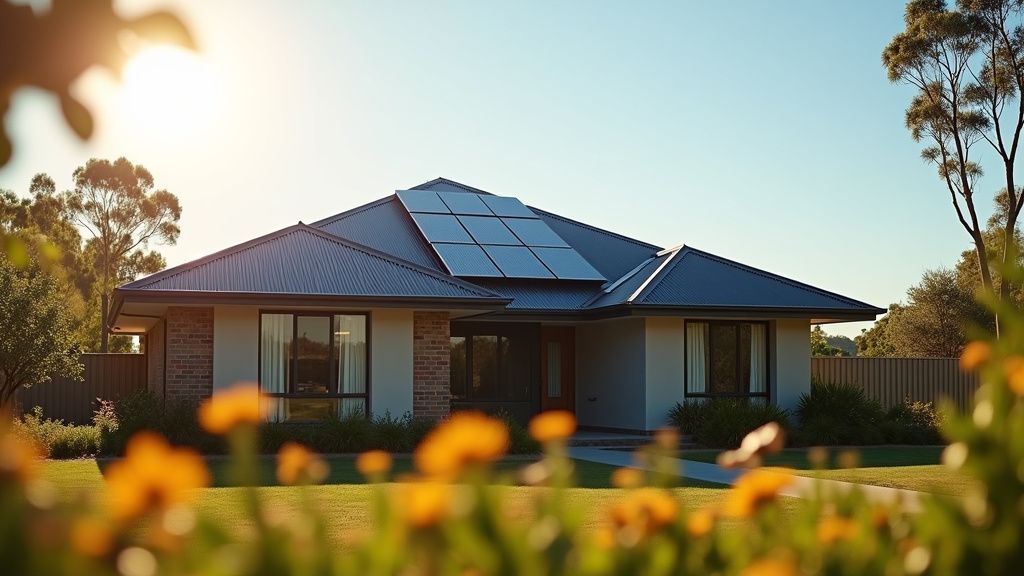
Solar, Batteries & VPPs in 2026: Your Aussie Guide to a Brighter Future
Thinking about harnessing the power of the sun in 2026? You're not alone! More and more Australians are looking to solar panels, battery storage, and Virtual Power Plants (VPPs) to take control of their energy bills and contribute to a greener future. But navigating this landscape can feel overwhelming. This guide will break down everything you need to know to make informed decisions about solar, batteries, and VPPs in Australia in 2026. For a deeper dive, read our Complete Guide.
Solar Power: Still Shining Bright
Solar panels remain a fantastic investment for Australian homeowners and businesses. Prices have stabilised, and the technology continues to improve. If you haven't already considered solar, 2026 is a great time to explore your options. Remember to get quotes from several installers and compare panel efficiency, warranties, and installation costs.
Home Batteries: Storing Sunshine and Savings
One of the biggest changes in the solar landscape is the increasing popularity and affordability of home battery storage. Batteries allow you to store excess solar energy generated during the day for use at night or during peak demand periods. This reduces your reliance on the grid and can significantly lower your electricity bills.
Government Incentives for Home Batteries: What's New?
The Australian Government is committed to supporting the uptake of home batteries. The "Cheaper Home Batteries Program" has been significantly expanded and is now projected to allocate $7.2 billion over the next four years.
This program provides financial assistance to households and small businesses to help offset the cost of installing eligible solar batteries. The details of the program are subject to change and will be formalised in Regulations effective from 1 May 2026, with ongoing adjustments made to ensure the discount remains relevant for various battery system sizes. Keep an eye on the Department of Climate Change, Energy, the Environment and Water's website for the most up-to-date information.
Small-Scale Technology Certificates (STCs) for Batteries:
The Small-scale Renewable Energy Scheme (SRES) also plays a role in making batteries more affordable. You can claim STCs for eligible battery systems, reducing the upfront cost. When you purchase the battery, registered agents can offer an upfront discount if you assign your right to claim the STCs to them. Alternatively, you can choose to manage the STC process yourself.
Important Eligibility Criteria for STCs (as of July 1, 2025, and expected to continue):
- Only one solar battery system per premises is eligible for STCs.
- Eligible batteries must have a nominal capacity between 5 kWh and 100 kWh. (Nominal capacity is the maximum amount of energy the battery can store when fully charged.)
- STCs can only be claimed for the first 50 kWh of a battery’s usable capacity. (Usable capacity is the amount of energy that can be discharged and used by your home or business.)
- Batteries must meet relevant Australian standards (AS/NZS 5139:2019).
- Batteries must be installed with solar PV systems. Batteries that only store energy from the grid are not eligible. All components must be approved and installed in a single job.
- If you're adding a battery to an existing solar PV system, the existing system must comply with state and territory electrical safety regulations.
Virtual Power Plants (VPPs): Joining the Energy Revolution
VPPs are networks of distributed energy resources, such as solar panels and batteries, that are aggregated and controlled to operate as a single power plant. By joining a VPP, you can allow the VPP operator to use your stored battery energy to support the grid during periods of high demand. In return, you typically receive payments or other benefits.
Why Join a VPP in 2026?
- Earn passive income: Get paid for contributing your excess energy to the grid.
- Support grid stability: Help keep the lights on for everyone by providing energy when it's needed most.
- Maximize your solar investment: Ensure you're getting the most out of your solar and battery system.
Things to Consider Before Joining a VPP:
- Contract terms: Understand the terms of the VPP agreement, including how much you'll be paid, how often your battery will be discharged, and any restrictions on your energy usage.
- Battery compatibility: Not all batteries are compatible with all VPPs. Check with the VPP operator to ensure your battery is supported.
- Privacy: Ensure the VPP operator has strong data privacy policies to protect your energy usage information.
Making the Right Choice for You
Deciding whether to invest in solar, batteries, or a VPP is a personal one. Consider your energy needs, budget, and environmental goals. Talk to several installers and VPP operators to get quotes and compare your options. By doing your research, you can make informed decisions and unlock the benefits of a cleaner, more affordable energy future.
The Future is Bright!
2026 promises to be an exciting year for solar, batteries, and VPPs in Australia. With government incentives, technological advancements, and increasing consumer demand, the transition to a renewable energy future is well underway. Embrace the opportunity to take control of your energy and contribute to a sustainable Australia!
